English
  Français
  Español

Content
- 1 Practical Guide to Waste Heat Boiler Economizer Integration for Industrial Efficiency
- 2 Understanding the Role of Waste Heat Boiler Economizers
- 3 Common Industrial Applications of Economizer‑Boiler Systems
- 4 Design Principles for Effective Waste Heat Boiler Economizers
- 5 Installation and Commissioning of Economizer Systems
- 6 Operational Best Practices for Performance and Reliability
- 7 Troubleshooting Common Waste Heat Boiler Economizer Issues
- 8 Performance Monitoring and Continuous Improvement
Practical Guide to Waste Heat Boiler Economizer Integration for Industrial Efficiency
A Waste Heat Boiler Economizer plays a critical role in maximizing thermal efficiency in industrial steam systems. This article provides a practical, implementation‑oriented guide to designing, selecting, and operating economizers combined with waste heat boilers, focusing on real‑world considerations, common configurations, optimization strategies, and troubleshooting. It is intended for engineers, plant managers, and technical professionals who want actionable insights on heat recovery, energy savings, and maintenance best practices.
Understanding the Role of Waste Heat Boiler Economizers
A Waste Heat Boiler Economizer is a heat recovery heat exchanger that captures low‑grade waste heat from flue gases and transfers it to feedwater before it enters the waste heat boiler or steam generator. This preheating reduces the fuel required to reach steam temperature and increases overall boiler efficiency. The key benefit is reducing fuel consumption while lowering stack temperatures, which also minimizes emissions.
In industrial settings such as steel mills, cement plants, and refineries, large volumes of hot exhaust gases are common. Instead of venting this energy to the atmosphere, a well‑designed economizer can reclaim it and convert it into useful thermal energy. Effective integration with waste heat boilers can improve energy performance by 5–15% or more, depending on the system and duty cycle.
Common Industrial Applications of Economizer‑Boiler Systems
When combined with a waste heat boiler, economizers are often installed in processes with substantial flue gas volumes and continuous operation. Typical applications include:
- Recovery of exhaust heat from gas turbines in cogeneration plants to preheat boiler feedwater.
- Heat capture from cement rotary kiln stacks feeding a waste heat recovery boiler and economizer for power generation.
- Steel reheating furnace flue gas routed through economizers to boost hot water or steam systems.
- Preheating boiler feedwater using waste heat from flare stacks or heater exhaust in refineries.
Design Principles for Effective Waste Heat Boiler Economizers
Sizing for Flue Gas Flow and Heat Duty
Proper sizing ensures the economizer captures as much heat as possible without causing condensation of acidic gases when temperatures fall below acid dew points. Engineers must know the flue gas flow rate, specific heat, and temperature, as well as the desired feedwater temperature rise. A mis‑sized economizer can lead to excessive pressure drop or carryover of corrosive condensate into components not designed for it.
Material Selection and Corrosion Control
Economizers operate in a challenging environment—the combination of high temperatures and corrosive gases. Carbon steel may be adequate for higher temperatures, but stainless steels or corrosion‑resistant alloys like Incoloy and Hastelloy are commonly used where sulfuric or nitric acids are a concern. Design should include protective coatings or water washes if acid condensation is likely.
Heat Transfer Surface Configuration
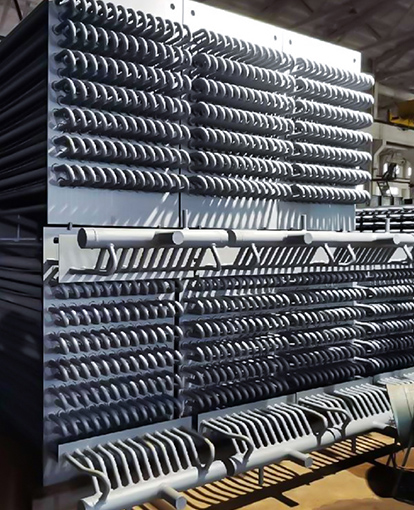
Fin type, spacing, and tube arrangement impact both heat transfer and fouling resistance. Finned tubes increase surface area and efficiency, but tight fin spacing can accelerate fouling in dirty gas streams. Computational fluid dynamics (CFD) simulations are often used to optimize tube layout for balanced heat transfer and acceptable pressure drop.
Installation and Commissioning of Economizer Systems
Installation involves mechanical, piping, and instrument work. A rigid support structure is needed to handle weight and thermal expansion. Access platforms are crucial for inspection and cleaning. Piping must include bypass lines and isolation valves to allow maintenance without taking the entire system offline.
During commissioning, it is essential to check for leaks, verify insulation integrity, and calibrate instruments. Start‑up procedures should gradually introduce flue gas and feedwater to avoid thermal shock. Monitoring first hours of operation helps identify issues like unequal flow distribution, which could lead to hotspots or premature tube failure.
Operational Best Practices for Performance and Reliability
Feedwater Quality Management
Feedwater entering the economizer should be treated to minimize scale and deposits. Hardness, dissolved solids, and oxygen content must be controlled within boiler manufacturer specifications. Poor water quality reduces heat transfer and increases corrosion risk. Common practices include deaeration, softening, and the use of chemical inhibitors tailored to specific systems.
Regular Cleaning and Fouling Control
Fouling from particulate matter in flue gases (e.g., soot, ash) reduces heat transfer over time. Cleaning strategies include:
- Off‑line chemical cleaning during shutdown periods.
- On‑line soot blowers or air blowers for gas‑side surfaces.
- Scheduled mechanical brushing by technicians.
The frequency of cleaning depends on fuel type, gas composition, and operating hours. Automated systems with differential pressure monitoring can trigger cleaning cycles before efficiency losses become significant.
Instrumentation and Control for Stable Operation
Key instruments include thermocouples at inlet and outlet, pressure gauges, flow meters, and differential pressure transmitters across the economizer. These sensors feed into a control system that adjusts feedwater flow and activation of bypass dampers to maintain desired temperatures. A good control strategy keeps exhaust gas temperatures above dew points to prevent corrosion while maximizing heat recovery.
Troubleshooting Common Waste Heat Boiler Economizer Issues
This section presents practical checks and corrective actions for problems frequently encountered in service.
Low Feedwater Temperature Rise
If the economizer fails to deliver the expected feedwater temperature increase, consider the following diagnostic steps:
- Confirm flue gas temperature and mass flow at the economizer inlet.
- Inspect for bypass valves inadvertently open.
- Check for fouling on gas‑side surfaces reducing heat transfer.
Addressing these issues often returns performance without significant hardware changes.
Excessive Pressure Drop Across Economizer
An increasing pressure drop indicates fouling or tube blockages. A measured trend of rising differential pressure over weeks suggests cleaning is overdue. For plants burning dusty fuels, consider installing pre‑filters or improving flue gas particulate control upstream.
Corrosion and Tube Failure
Corrosion is often linked to flue gas temperatures below the acid dew point. Increasing gas outlet temperature, using corrosion‑ resistant materials, or adjusting feedwater chemistry are common mitigation strategies. Regular thickness measurements can detect early wall loss before leaks occur.
Performance Monitoring and Continuous Improvement
Establishing a performance monitoring plan ensures long‑term efficiency. Typical key performance indicators (KPIs) include:
| Parameter | Target/Range | Notes |
| Economizer Outlet Temp | > Acid Dew Point | Avoid corrosion |
| Differential Pressure | Stable/Minimal Rise | Indicates clean heat surfaces |
| Feedwater Temp Increase | As Designed | Verifies duty performance |
Trend data should be reviewed monthly, and anomalies investigated immediately. Continuous improvement often involves adjusting cleaning schedules, updating control logic, or retrofitting components for better performance.
An effective economizer and waste heat boiler program can save significant fuel costs, reduce emissions, and extend equipment life. Real‑world success stems from thoughtful design, disciplined operation, and proactive maintenance.