English
  Français
  Español


Content
- 1 Direct Answer: What a Waste Heat Boiler Economizer Achieves
- 2 How a Waste Heat Boiler Economizer Works
- 3 Key Performance Benefits in Industrial Applications
- 4 Design Types and Configuration Options
- 5 Critical Design Parameters That Affect Efficiency
- 6 Maintenance Practices for Long-Term Reliability
- 7 When Installing a Waste Heat Boiler Economizer Makes the Most Sense
Direct Answer: What a Waste Heat Boiler Economizer Achieves
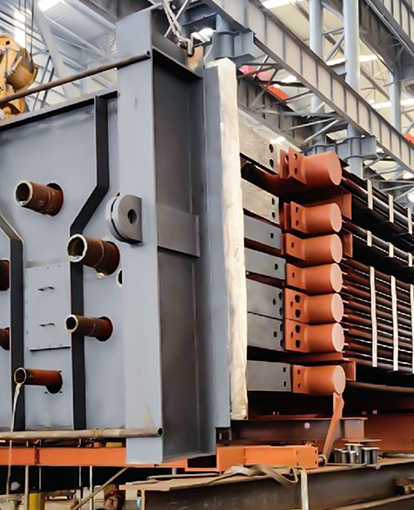
A waste heat boiler economizer is a heat-recovery component installed in the exhaust gas path to preheat boiler feedwater before it enters the steam drum or evaporator section. By recovering energy that would otherwise escape through the stack, it directly improves boiler efficiency and reduces fuel consumption.
In practical industrial operation, installing an economizer typically increases overall boiler efficiency by 5%–12%, lowers fuel usage, and decreases exhaust gas temperature by 40–120°C, depending on system design and load conditions. This translates into measurable cost savings and reduced emissions without increasing boiler capacity.
How a Waste Heat Boiler Economizer Works
Industrial processes such as gas turbines, furnaces, kilns, and chemical reactors release high-temperature exhaust gases. Instead of venting this energy, the economizer transfers heat from flue gas to incoming feedwater through heat-exchange tubes.
Heat Transfer Process
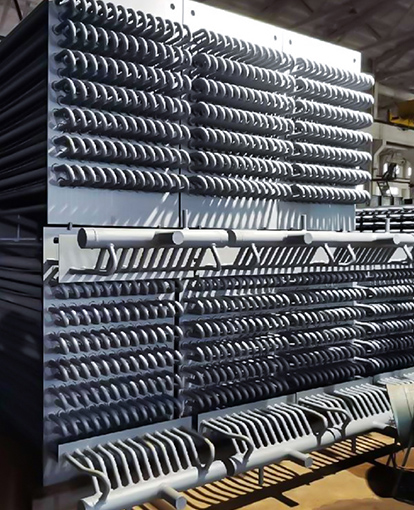
Exhaust gas flows across finned or bare tubes while feedwater circulates inside them. Sensible heat moves through tube walls, increasing water temperature before it reaches the boiler’s evaporation zone. Because preheated water requires less energy to convert into steam, fuel demand decreases.
- Hot exhaust gas enters economizer section
- Heat transfers through tube surfaces
- Feedwater temperature rises before boiler entry
- Stack temperature decreases and efficiency improves
Key Performance Benefits in Industrial Applications
The economizer is often considered one of the fastest-payback upgrades in heat-recovery systems because it uses already available energy. Facilities operating continuous processes gain the most measurable improvements.
Typical Operational Advantages
- Reduced fuel consumption due to higher feedwater temperature
- Lower greenhouse gas emissions per ton of steam produced
- Improved boiler thermal efficiency and stability
- Reduced thermal stress on boiler components
- Lower operating costs with minimal additional energy input
For example, a 20-ton/hour waste heat boiler operating 8,000 hours annually can save roughly 300–500 tons of fuel per year after economizer installation, depending on exhaust temperature and fuel type.
Design Types and Configuration Options
Economizer design varies according to exhaust gas composition, temperature range, and maintenance requirements. Proper configuration ensures maximum heat recovery without corrosion or excessive pressure drop.
| Type | Main Feature | Best Application | Efficiency Impact |
|---|---|---|---|
| Bare Tube | Simple construction | Clean gas streams | Moderate |
| Finned Tube | Large heat-transfer area | Gas turbines & HRSG | High |
| Condensing Economizer | Recovers latent heat | Low-temperature exhaust | Very High |
Critical Design Parameters That Affect Efficiency
Performance depends heavily on engineering calculations rather than simply adding heat-exchange surface area. Incorrect sizing can cause corrosion, fouling, or insufficient heat recovery.
Important Engineering Considerations
- Exhaust gas inlet temperature and composition
- Feedwater flow rate and inlet temperature
- Allowable pressure drop across economizer
- Acid dew point to prevent corrosion
- Fouling tendency and cleaning accessibility
Engineers typically maintain stack temperatures at least 15–25°C above the acid dew point to avoid sulfuric acid condensation in systems burning sulfur-containing fuels.
Maintenance Practices for Long-Term Reliability
Although economizers have no moving parts, neglecting maintenance can quickly reduce efficiency. Deposits on tube surfaces act as insulation and weaken heat transfer performance.
Recommended Maintenance Actions
- Perform periodic soot blowing or gas-side cleaning
- Monitor exhaust temperature trends for efficiency loss
- Inspect tube corrosion during scheduled shutdowns
- Maintain proper feedwater treatment chemistry
Plants that implement routine cleaning often maintain over 90% of original heat-transfer efficiency even after several years of operation.
When Installing a Waste Heat Boiler Economizer Makes the Most Sense
Economizers provide the strongest return on investment in facilities with continuous high-temperature exhaust streams and steady steam demand.
- Gas turbine combined heat and power plants
- Cement, steel, and glass manufacturing lines
- Petrochemical and refinery waste heat recovery systems
- Large industrial boilers operating above 60% load
In these environments, payback periods commonly range from 12 to 30 months, making economizers one of the most financially efficient energy-optimization upgrades available.