English
  Français
  Español


Content
Introduction to H type Finned Tube and Smooth Tubes
In heat transfer applications, the choice of tube design significantly impacts thermal performance, energy efficiency, and overall operational cost. H type Finned Tube and smooth tubes are two widely used designs, each with distinct characteristics. Understanding their comparative performance helps engineers and designers optimize heat exchangers for various industrial applications.
Design Differences and Their Impact on Heat Transfer
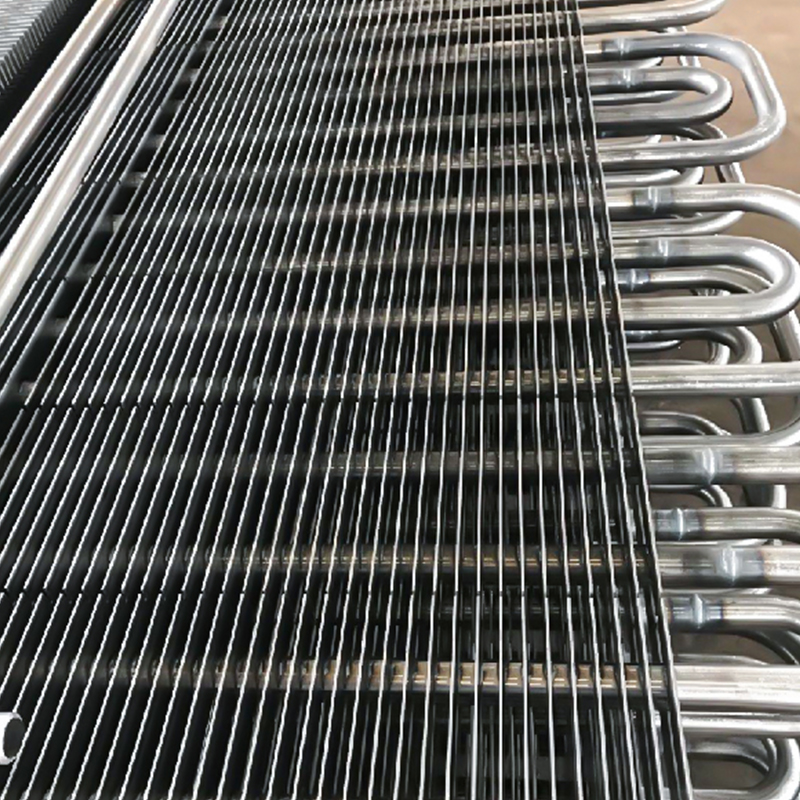
The primary distinction between H type Finned Tube and smooth tubes lies in the addition of fins. Smooth tubes have a uniform cylindrical surface, whereas H type Finned Tubes feature external fins that increase the surface area for heat transfer.
Surface Area Enhancement
Fins in H type Finned Tube significantly increase the contact surface with the fluid or gas surrounding the tube. This enhancement allows for higher rates of convective heat transfer, which is particularly beneficial in air-cooled or water-cooled heat exchangers where the surrounding medium has lower thermal conductivity.
Thermal Conductivity Considerations
The base material of both H type Finned Tube and smooth tubes is usually high-conductivity metals such as carbon steel, stainless steel, or copper alloys. While the base material influences conduction through the tube wall, the finned design primarily boosts convective heat transfer by increasing the effective heat exchange area without significantly altering conduction through the tube itself.
Comparison of Thermal Performance
The thermal performance of H type Finned Tube versus smooth tubes can be analyzed through several factors, including heat transfer coefficient, temperature difference, and overall efficiency.
Heat Transfer Coefficient
H type Finned Tube generally exhibits a higher overall heat transfer coefficient due to the additional surface area. The convective coefficient on the fin side can be enhanced by 30% to 100% depending on fin density, fin height, and fluid properties.
Temperature Profiles
In applications such as condensers or boilers, the increased surface area of H type Finned Tubes allows for more uniform temperature distribution. Smooth tubes may experience localized hot spots due to limited surface area, which can reduce efficiency in large-scale systems.
Energy Efficiency
Because H type Finned Tube achieves higher heat transfer rates, it often enables lower fluid flow rates to achieve the same thermal performance as smooth tubes. This can result in reduced pumping energy and lower operational costs, making H type Finned Tube more energy-efficient in certain scenarios.
Application-Specific Advantages
The suitability of H type Finned Tube or smooth tubes depends on the specific application. Factors such as fluid type, temperature range, and installation environment influence which design is optimal.
Air-Cooled Heat Exchangers
H type Finned Tube is preferred in air-cooled heat exchangers because air has relatively low thermal conductivity. The fins increase the surface area in contact with air, improving heat dissipation compared to smooth tubes.
High-Temperature Fluid Applications
In steam or high-temperature water applications, both H type Finned Tube and smooth tubes can handle the thermal load. However, the finned tube allows for more compact heat exchanger designs because it transfers more heat per unit length, which is advantageous in space-limited installations.
Corrosion and Fouling Considerations
Smooth tubes are easier to clean and maintain, which is important in fluids prone to fouling. Finned tubes, with their increased surface complexity, may require specialized maintenance to prevent efficiency loss due to deposit buildup. Proper material selection and fin geometry can mitigate these challenges.
Practical Performance Comparison Table
| Feature | H type Finned Tube | Smooth Tube |
| Surface Area | High (fins increase area by 1.5–3×) | Low (bare tube surface only) |
| Heat Transfer Coefficient | Higher due to increased convection | Lower, limited by base surface |
| Energy Efficiency | Better, can reduce flow rate and pumping energy | Moderate, requires higher flow rates |
| Ease of Cleaning | Moderate, fin surfaces may trap deposits | Easy, smooth surface resists fouling |
| Installation Space | Compact, higher heat per unit length | Requires more tube length for same heat transfer |
Design Optimization for Maximum Efficiency
Optimizing H type Finned Tube performance involves adjusting fin geometry, material selection, and tube layout. Key considerations include:
- Fin height and pitch to maximize surface area without causing excessive pressure drop.
- Material choice to balance thermal conductivity, corrosion resistance, and cost.
- Tube arrangement and spacing to optimize fluid flow and heat transfer efficiency.
- Use of enhanced fin shapes, such as wavy or serrated fins, to improve turbulence and convective transfer.
Conclusion
H type Finned Tube offers distinct thermal advantages over smooth tubes, particularly in air-cooled and compact heat exchanger applications. Its increased surface area improves convective heat transfer, energy efficiency, and temperature uniformity. However, smooth tubes remain relevant in applications requiring simple maintenance, minimal fouling, and low-pressure drop. Selecting between H type Finned Tube and smooth tubes depends on balancing thermal performance, maintenance requirements, installation space, and operational cost. A well-informed design decision ensures optimal efficiency and longevity in heat transfer systems.