English
  Français
  Español

Content
Effective maintenance and inspection of boiler finned tubes rely on structured cleaning cycles, precise thickness measurements, and targeted repair protocols that preserve thermal efficiency and extend service life. Facilities that implement quarterly deposit removal and annual nondestructive testing consistently reduce heat transfer degradation by over fifteen percent while eliminating catastrophic tube failures. The following strategies outline actionable methods to sustain optimal boiler performance.
Proactive Maintenance Schedules and Execution
Establishing fixed maintenance intervals prevents deposit accumulation and ensures consistent heat exchange. Operators must align cleaning routines with fuel type and operational hours. Gas fired units require different attention profiles compared to solid fuel systems due to ash composition and melting points. A standardized approach minimizes thermal resistance and avoids localized overheating.
Structured Cleaning Intervals
Cleaning frequency directly impacts pressure drop and fuel consumption. Facilities that perform acoustic soot blowing on a daily basis report a reduction in back pressure by approximately eight percent. For solid fuel boilers, mechanical brushing and high pressure air lancing should occur every three hundred operating hours. This schedule prevents ash buildup from bridging across the finned sections, which can restrict flue gas flow by up to thirty percent in unmanaged systems.
- Schedule pneumatic cleaning every two weeks for high dust environments
- Perform water washing during planned outages when soot contains sticky ash
- Monitor differential pressure gauges to trigger cleaning before the threshold reaches fifteen percent above baseline
Advanced Inspection Techniques and Data Collection
Regular inspection identifies material degradation before structural failure occurs. Nondestructive evaluation methods provide accurate thickness readings and detect internal corrosion without system dismantling. Combining visual assessments with electronic monitoring creates a comprehensive maintenance record.
Nondestructive Testing Procedures
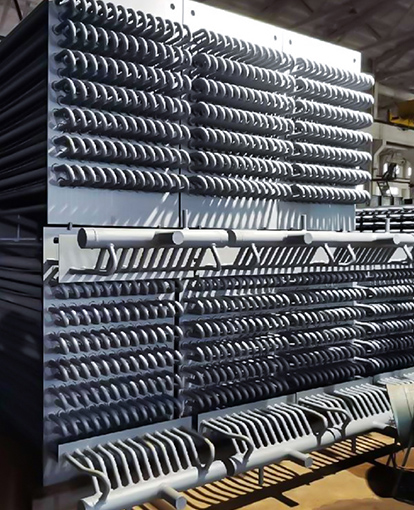
Ultrasonic testing remains the primary method for measuring wall thickness on boiler finned tubes. Technicians should probe the base tube section near the fin attachment points where corrosion typically accelerates. Data shows that tubes operating above four hundred degrees experience thinning rates of approximately zero point one millimeters annually without proper water chemistry control. Eddy current testing complements this process by detecting surface cracks and fin to tube bond failures that ultrasound might miss. Maintaining a digital database of thickness measurements allows engineers to calculate remaining useful life with high precision.
| Inspection Method | Primary Detection Target | Required Surface Preparation |
|---|---|---|
| Ultrasonic Testing | Wall thickness loss | Light cleaning and coupling gel application |
| Eddy Current Testing | Surface cracks and fin separation | Minimal preparation with dry coil scanning |
| Visual Endoscopy | Internal scaling and pitting | Tube opening access and lighting setup |
Targeted Repair Protocols and Performance Tracking
Identifying defects requires immediate corrective action to restore thermal balance. Repair strategies depend on the severity of tube degradation and the extent of fin damage. Facilities that document repair cycles and track operational metrics achieve longer intervals between major overhauls.
Corrective Measures for Degraded Tubes
When wall thickness falls below the minimum design specification, replacement becomes mandatory rather than optional. Isolated sections can be isolated by welding caps, but this must not exceed ten percent of the total tube bundle to avoid excessive gas velocity increases. For minor fin damage, mechanical straightening or thermal reattachment restores surface area. Replacing compromised tubes within thirty days of detection reduces emergency shutdown risks by over sixty percent. Operators should verify water treatment parameters after any tube intervention to prevent recurrence of corrosion mechanisms.
- Install isolation sleeves on localized thin areas when replacement requires extended downtime
- Apply high temperature refractory cement to repair damaged fin edges and prevent edge cracking propagation
- Conduct hydrostatic pressure testing at one point five times operating pressure before returning the boiler to service