English
  Français
  Español


Content
Immediate Efficiency Gains
A waste heat boiler economizer delivers one of the highest returns on investment in industrial heat recovery. By capturing low-temperature flue gas energy that would otherwise escape up the stack, a properly sized economizer preheats boiler feedwater and directly reduces fuel consumption by 5% to 15%. This translates into lower operating costs, reduced carbon dioxide emissions, and improved boiler stability—making it a cornerstone of modern energy management.
- Fuel savings rapidly recover the installation cost, often within 12 to 24 months.
- Enhanced thermal efficiency boosts steam generation without additional fuel input.
- Reduced flue gas exit temperature lowers heat pollution and stack losses.
Fundamental Operating Principles
In a waste heat boiler, flue gas leaving the main evaporator still carries substantial thermal energy, typically between 200°C and 400°C. The economizer is positioned in the cooler gas path downstream of the superheater and evaporator. Feedwater passes through a series of tubes while hot gas flows around them, transferring heat. The key performance metric is the approach temperature—the difference between the outlet feedwater temperature and the saturation temperature in the drum. A lower approach temperature indicates more effective heat recovery, but must be balanced against the risk of steaming within the economizer.
Every 10°C rise in feedwater temperature approximates a 1% improvement in boiler efficiency. For example, raising feedwater from 105°C to 130°C on a 20 MW boiler can save hundreds of tonnes of natural gas annually. The heat transfer predominantly occurs via convection, making gas velocity and tube surface area critical design parameters.
Impact on Operational Stability and Emissions
Preheating feedwater stabilizes the temperature profile inside the boiler drum. Cold water entering the evaporator creates thermal shock and pressure fluctuations; an economizer smooths these variations, allowing more consistent steam pressure and temperature. In combined heat and power plants, this stability is essential for turbine longevity.
The environmental benefit is equally compelling. Reducing fuel usage by 4% to 8% directly cuts carbon dioxide emissions in the same proportion. For a medium-sized industrial boiler burning heavy oil, a 6% fuel saving can eliminate over 500 tonnes of CO₂ per year. Nitrogen oxide and particulate matter emissions also decline because less fuel is combusted. This direct link makes the economizer a strategic asset for companies pursuing carbon neutrality and compliance with tightening emission standards.
Design Configurations for Different Fuel Types
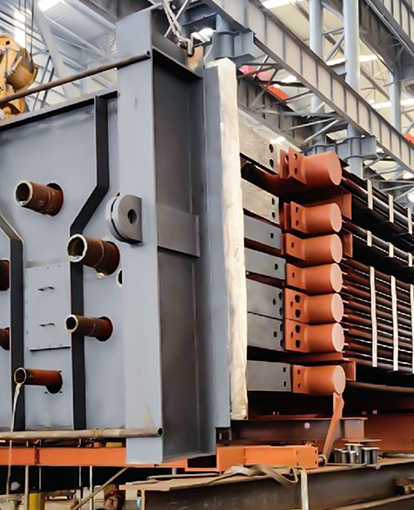
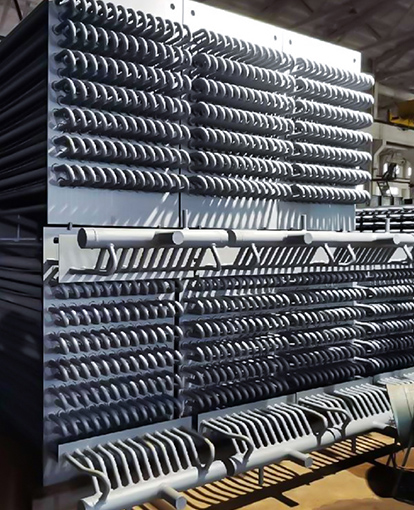
Economizer design must be matched to the fuel and flue gas characteristics to prevent fouling and corrosion. The three primary configurations serve distinct applications:
| Economizer Type | Typical Fuel/Application | Flue Gas Temp. Range | Key Feature | Smooth Tube | Clean gas, natural gas boilers | 200–350°C | Minimal ash deposition, easy cleaning | Finned/Toothed Tube | Gas/oil-fired, HRSG | 250–400°C | Higher heat transfer density in compact space | Bare Tube (in-line) | Pulverized coal, biomass, waste incineration | 250–380°C | Resists fouling, allows sootblower access |
|---|