English
  Français
  Español


Content
Why HRSG Selection Decides Your Plant's Long-Term Efficiency
A gas turbine exhaust stack running at 500–600°C is, in effect, an open valve on your fuel bill. The equipment that closes that valve is the heat recovery steam generator product range sitting downstream of the turbine. Get the configuration wrong — undersized heating surface, mismatched pressure levels, the wrong tube material for the gas chemistry — and you lock in years of lost output before the unit ever starts up.
An HRSG is not a single product but a family of configurations, and the right one depends almost entirely on where the heat is coming from and what you need to do with the steam.
The Components That Actually Determine Performance
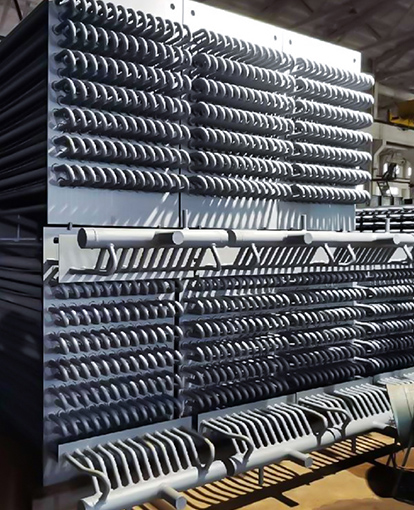
Every HRSG, regardless of size, is built around the same three heat-transfer stages working in sequence. The economizer preheats feedwater using the coolest available flue gas, the evaporator converts that water to saturated steam, and the superheater raises steam temperature to turbine-ready conditions. How these sections are sized relative to each other — not just their total surface area — is what separates a unit that hits its rated output from one that underperforms by 5–10% from day one.
Pressure-level configuration matters just as much. A single-pressure HRSG is simpler and cheaper but leaves energy in the lower-temperature exhaust unrecovered. Triple-pressure designs with reheat extract heat across the full temperature range and are why utility-scale combined-cycle plants routinely push net efficiency gains that translate directly into lower fuel cost per megawatt-hour over a 20-plus-year service life.
Matching HRSG Type to Your Application
The biggest selection mistake is treating "HRSG" as one product when the operating environment changes everything.
For combined-cycle and coal-fired power plants, a power station waste heat boiler typically runs a triple-pressure or multi-pressure layout designed for fast start-up, variable load tracking with grid demand, and flue gas exhaust temperatures pushed below 100°C for emissions compliance. As a reference point, one of our power-station units is built to a design pressure of 20.44 MPa with inlet/outlet flue gas temperatures of 280°C and 314°C across more than 15,800 m² of heating surface — figures that illustrate the scale these systems operate at, even before pressure-level configuration is finalized.
Heavy industry — steel, cement, chemical, and non-ferrous smelting — produces flue gas with far more variable temperature and composition. Here, an industrial waste heat boiler needs to prioritize tolerance to fluctuating inlet conditions and dust loading over peak thermal efficiency, with tube spacing and cleaning access designed around fouling rather than minimum footprint.
Waste incineration is its own category entirely. Flue gas laden with chlorine, sulfur compounds, and fly ash will degrade standard carbon steel quickly, so waste heat boilers for waste treatment plants are typically specified with corrosion-resistant alloys such as ND steel in the high-temperature zones, along with wider tube pitches that reduce ash bridging between passes.
A Practical Checklist Before You Specify
- Flue gas temperature range and chemical composition — drives material selection, not just surface area
- Required pressure level configuration — single, dual, or triple-pressure with or without reheat
- Load profile — continuous baseload versus frequent start-stop cycling, which affects thermal stress design
- Footprint and transport constraints — modular sectioning allows large units to be shipped and assembled on constrained sites
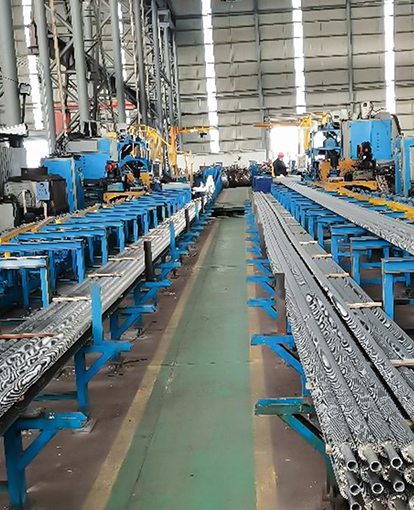
- Manufacturer qualifications — pressure-part fabrication should carry recognized credentials such as ASME-S certification and ISO 9001/14001/45001
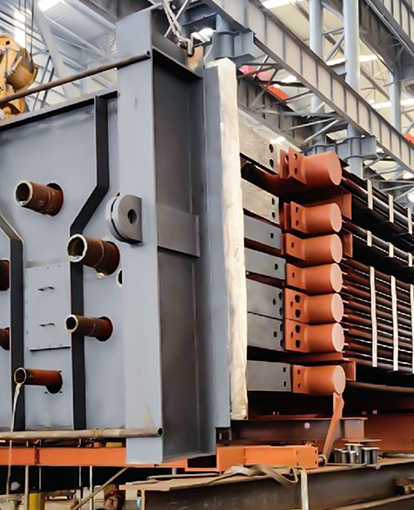
Modular construction also plays a bigger role than many specifiers realize. Dividing the boiler into transportable sections with predefined fixed and sliding supports gives engineers control over where thermal expansion happens, which directly reduces fatigue-related failures over years of cycling.
Getting the Right Configuration From the Start
Choosing an HRSG is ultimately a matching exercise — heat source, gas chemistry, load profile, and site constraints all need to line up with the unit's pressure configuration, materials, and structural design. Skipping this step rarely shows up as an obvious failure; it shows up as a few percentage points of efficiency quietly missing for the next two decades. Working with a manufacturer that holds full pressure-component fabrication qualifications and can walk through these parameters at the design stage is the difference between a unit that meets its rated numbers and one that just meets spec.