English
  Français
  Español


Content
Most natural gas and oil fired boilers lose 18 to 22 percent of their fuel input as hot flue gas leaving the stack. An industrial boiler economizer captures part of that heat and returns it to the feedwater, which means the burner uses less fuel to produce the same steam output. That makes the economizer one of the least complicated and fastest-paying heat recovery measures available. The following sections cover how it works, realistic savings, and the design details that separate a good installation from a poor one.
What Is an Industrial Boiler Economizer?
An industrial boiler economizer is a heat exchanger installed in the exhaust path of a boiler, downstream of the steam drum or superheater. Its job is to transfer heat from flue gas to boiler feedwater before that water enters the evaporator section. With the feedwater preheated by 100 to 200°F, the burner needs less fuel to reach saturated steam temperature, so boiler thermal efficiency increases.
Economizers are sometimes called flue gas heat recovery units or feedwater preheaters. In large plants they are often combined with a heat recovery steam generator, but the economizer itself remains a simple, reliable component: hot gas on the outside of the tubes, pressurized water on the inside.
How Does It Recover Waste Heat?
Flue gas from an industrial boiler leaves the furnace at roughly 350 to 550°F, depending on fuel type, excess air, and boiler design. The economizer sits between the last heat-absorbing section and the stack. As hot gas moves across the finned tubes, heat is transferred through the tube wall to the feedwater flowing inside.
Fins multiply the heat transfer surface area by three to ten times compared with bare tubes, which keeps the exchanger compact and reduces gas-side pressure drop. Most designs use a countercurrent flow pattern: the hottest water meets the coolest gas at the outlet, and the coolest water meets the hottest gas at the inlet. This arrangement maximizes the average temperature difference and allows lower stack-gas temperatures than a simple concurrent flow layout.
What Efficiency Gains Are Realistic?
Typical combustion efficiency for an industrial boiler is 78 to 82 percent, meaning 18 to 22 percent of the fuel energy goes out with the exhaust. A well-sized economizer can recover 30 to 50 percent of that available stack loss. In practice, that translates to a boiler efficiency gain of 2 to 5 percentage points and a corresponding reduction in fuel consumption.
For a 100,000 lb/h boiler operating 8,000 hours per year, a 3 percent efficiency gain can save several hundred thousand dollars annually depending on fuel price and load profile. The exact saving depends on the temperature difference between the flue gas and the feedwater, the fuel analysis, and whether the unit operates at full or part load.
| Parameter | Non-Condensing | Condensing |
|---|---|---|
| Stack temperature | 250 to 350°F | 100 to 150°F |
| Efficiency gain | 2 to 3 percentage points | 4 to 6 percentage points |
| Heat recovered | Sensible heat only | Sensible plus latent heat |
| Material requirement | Carbon steel possible | Stainless steel or lined |
| Acid dew point risk | Low if gas stays above 300°F | Must be managed with fuel gas analysis |
Condensing or Non-Condensing: Which Is Right?
Non-condensing economizers keep the flue gas temperature above the acid dew point, typically around 250 to 300°F for natural gas. They are simpler, less expensive, and can often be built in carbon steel. The heat recovered is purely sensible heat, which is enough for many plants.
Condensing economizers cool the flue gas below the water vapor dew point, usually 135 to 150°F, so they also recover the latent heat of condensation. That adds another 2 to 3 points of efficiency. The tradeoff is corrosion: sulfur in the fuel produces acid that condenses at lower temperatures, so the exchanger requires stainless steel, duplex alloys, or a corrosion-resistant lining. A drain and neutralization system are also needed. Condensing units are a good fit when the feedwater is cold and the fuel is clean natural gas, but they are not a universal low-cost upgrade.
Selection Factors That Decide Performance
Selecting an economizer means more than picking the largest size. The real performance depends on matching the heat exchanger to the actual flue gas and water conditions. Start with a complete fuel analysis. Sulfur content, moisture, and ash determine the acid dew point and the fouling risk. Then define the inlet and outlet temperatures on both sides. The desired stack temperature sets the heat duty, while the available feedwater temperature sets the lower limit.
Pressure drop is the second constraint. Every inch of gas-side pressure drop increases the draft requirement and the fan power. A good design stays within the existing draft allowance or states exactly how much additional fan power is required. Water-side pressure drop also matters because it affects feedwater pump capacity.
Finned Tube Geometry
Most industrial economizers use finned tubes because the extended surface keeps the exchanger small. Spiral finned tubes are compact and economical, but the continuous fin path collects ash at tube supports. H-type finned tubes use a welded fin with an H shape that creates a flat, open path, reducing ash deposition and making cleaning easier. For high-ash fuels, many engineers specify H-type finned tubes because the design lowers both erosion and fouling. When you compare suppliers, it is worth checking how each manufacturer handles this point; H-type finned tube designs can be reviewed side by side.
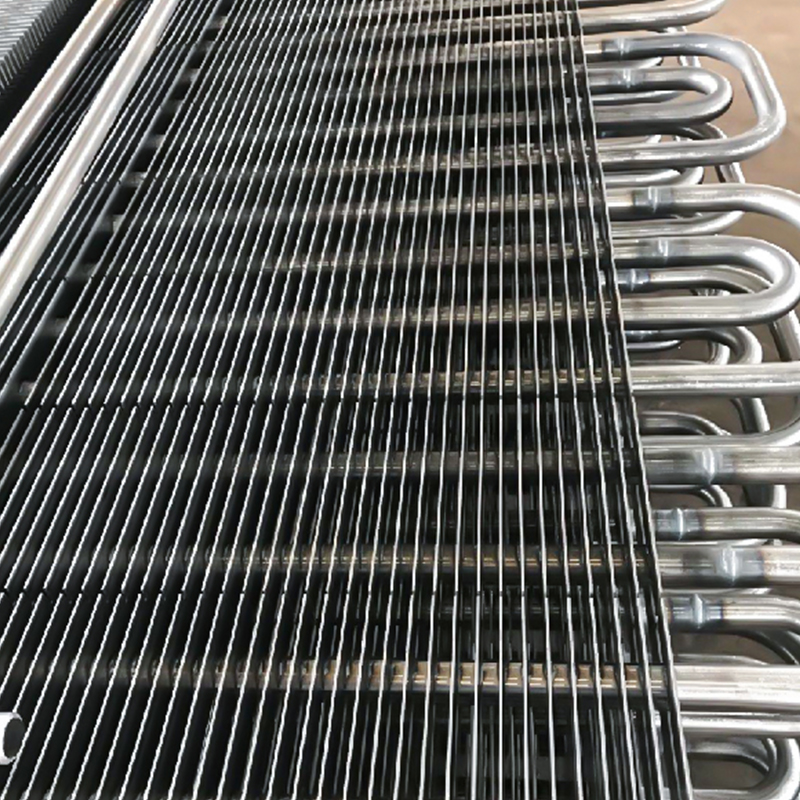 H Type Finned Tubes Suppliers, Double-Finned Tubes FactoryJinker is H Type Finned Tubes Supplier and Double-Finned Tubes Factory, Flat Finned Tubes Suppliers in China, Custom H Type Finned Tubes ...View Product →
Application Fit
The physical arrangement also affects the installation. A packaged or watertube boiler has a defined stack transition where the economizer must fit. The unit should include support lugs, access doors, manways, and connection nozzles for water inlet, outlet, and drains. Building the economizer to match the existing stack and ductwork avoids expensive field modifications. For a typical package boiler, an industrial boiler tail flue gas economizer can be supplied as a modular unit that integrates with the existing exhaust path. That is where a manufacturer with engineering support makes a difference.
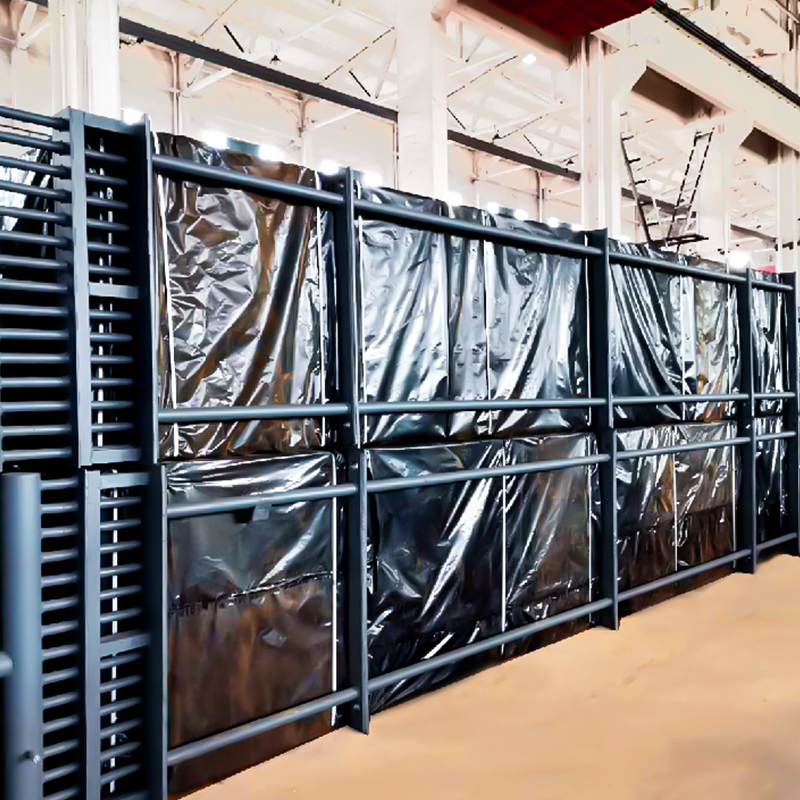 Boiler Flue Gas Economizers Suppliers, Flue Gas Economizers FactoryAs Boiler Flue Gas Economizers Suppliers and Flue Gas Economizers Factory, Jinker offer Custom Economizer for Boiler Tail Flue Gas, Boile...View Product →
Installation and Operating Considerations
Installation quality affects the long-term reliability of an economizer. A full bypass damper lets the plant isolate the unit for maintenance and allows the boiler to operate if the economizer needs repair. The unit must be drainable to prevent freezing in cold climates, and the stack should have access doors upstream and downstream for inspection and cleaning.
On the water side, provide a relief valve and a filter strainer to protect the tubes from debris. On the gas side, soot blowers may be necessary if the fuel tends to foul. The pressure casing must be designed for the flue gas pressure and temperature, with expansion joints where needed to handle thermal growth. Water chemistry control is also critical: dissolved oxygen and low pH cause waterside corrosion, so maintain proper deaeration and oxygen scavenger levels. In practice, a well-maintained economizer performs for decades, while a neglected one becomes the first tube leak in the boiler.
An industrial boiler economizer is a proven waste heat recovery device. With realistic stack temperature and feedwater data, a properly selected unit will pay back in months to a few years, depending on load and fuel cost. Start with a stack thermometer, a fuel bill, and a review of your boiler room drawings; those are enough to launch a serious evaluation.