English
  Français
  Español


Content
Consider a combined cycle project on the U.S. Gulf Coast. Nine months into construction, the general contractor realizes the heat recovery steam generator (HRSG) erection sequence will push the schedule out by six weeks. The issue is not turbine delivery or foundation work; it is the volume of field welding required for tube bundles, casing, and interconnecting piping. The owner switches to a modular HRSG system for the second unit, and field erection time drops to roughly one-third of the original estimate.
That outcome is not exceptional. Modular HRSG systems have moved from an engineering niche to a standard decision point in power and industrial project planning. What matters for a buyer is understanding what modular construction includes, where the trade-offs sit, and how to evaluate suppliers before the purchase order is signed.
What Is a Modular HRSG System?
A heat recovery steam generator recovers heat from a gas turbine exhaust or industrial flue gas stream and produces steam for a steam turbine, a process requirement, or both. In a modular HRSG system, the unit is split into factory-built sections, called modules, rather than assembled piece by piece on site.
Each module typically contains:
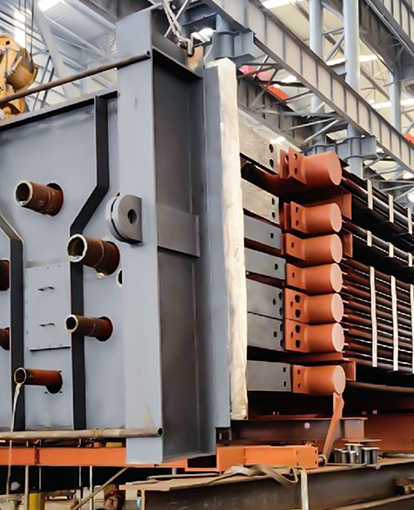
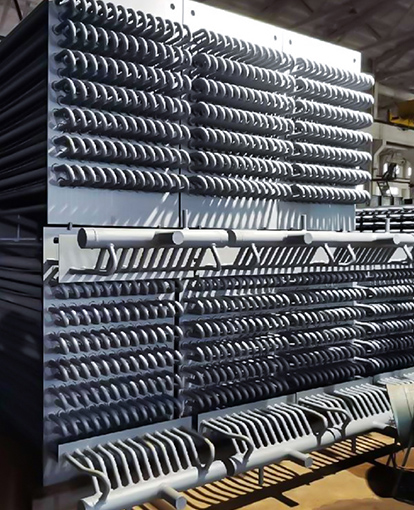
- Heat exchange harps with finned tubes and headers that are welded and pressure-tested in the factory
- Boiler casing sections including walls, floor, and ceiling with insulation and liner plating
- Platform steel, laddering, and a portion of the instrumentation where practical
At the jobsite, the modules are lifted into position, aligned, and joined with a limited number of field welds. This approach occupies the middle ground between a fully site-erected HRSG, where individual tube bundles are installed on location, and a packaged HRSG, which is a smaller shop-assembled unit that arrives as one block.
How Modular Construction Cuts Jobsite Time and Cost
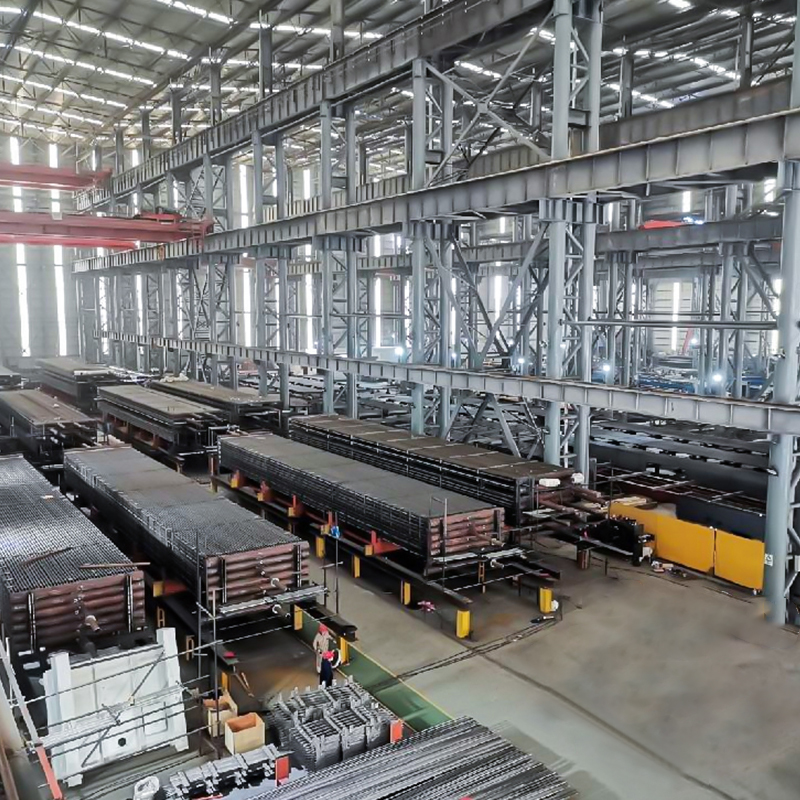
The clearest benefit of a modular HRSG system is schedule compression. Because module fabrication happens at the factory while foundation and civil work proceed simultaneously, the critical path shrinks. For large machines, on-site assembly that once needed eight to twelve months can be reduced to about three to five.
Cost improvements follow from the same logic:
- Fewer field welds mean fewer certified boiler welders must be mobilized at specialist rates
- Factory conditions produce more consistent weld quality and lower rework percentages
- Workshop work is not exposed to rain, wind, and cold, which stop field welding and slow progress
- Shorter site installation reduces crane hire, temporary facilities, and construction management costs
Quality control is also stronger in a factory environment. X-ray and ultrasonic inspection of pressure welds is performed under repeatable procedures instead of on scaffolding. For owners in regions with a limited pool of experienced boiler erectors, modular execution significantly reduces project delivery risk.
| Factor | Modular HRSG System | Site-Erected HRSG |
|---|---|---|
| Factory content | 80 to 90 percent | 20 to 30 percent |
| Field weld count | Low, limited to module joints | High, many tube and casing welds |
| Erection schedule | 3 to 6 months typical | 8 to 12 months typical |
| Weld inspection | Workshop-based, repeatable | Field-based, weather dependent |
| Transport requirement | Oversized module logistics | Standard component shipping |
| Design flexibility | High within transport envelope | Highest, but more site work |
Engineering and Standards Considerations for Modular HRSG Design
A modular HRSG is not just a site-erected design cut into pieces. Every module must be engineered for lifting and transport while still satisfying pressure, thermal, and structural requirements in its final operating position.
The governing rules include ASME Section I or Section VIII depending on the steam service and local jurisdiction, plus additional checks for lifting points and transport loads that are often higher than in-service forces. Thermal expansion analysis matters just as much because a module joint that is convenient to fabricate may introduce a restraint that changes how the unit behaves when it heats up.
The most important decision in a modular design is where the module boundaries fall. Headers, downcomers, and interconnecting piping all require weld access at the jobsite. A good modular configuration groups these connections so that erection welding is minimized while staying within shipping envelope limits.
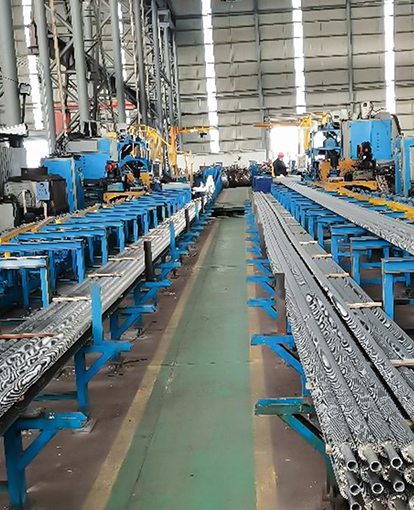
Buyers should ask pointed questions during supplier evaluation. Has the manufacturer built pressure parts under ASME-compliant procedures? Does it operate automated welding lines and real-time X-ray inspection? Can it produce three-dimensional layout drawings and verify thermal input calculations? These capabilities determine whether the modular configuration will work in practice, not just on paper.
Integrated manufacturers tend to perform better in this respect. A company that produces a power station waste heat boiler alongside its own finned tubes and economizer sections can manage tolerance build-up across module boundaries more tightly than one that assembles bought-in components.
 Power Station Waste Heat Boilers Solutions, Power Plant Waste Heat Boilers SupplJinker supply Waste Heat Boilers for Power Station, As Power Station Waste Heat Boilers Solution, is Power Plant Waste Heat Boilers Suppl...View Product →
Procurement Risks to Plan For
Modular HRSG systems reduce site labor risk, but they introduce a new set of risks that project teams need to address in the contract phase.
- Transportation and route survey. Oversized modules may require special permits, barge transport, or specific crane selections. A site with narrow access roads or overhead restrictions can erase the schedule benefit quickly.
- Module interface tolerance. When two large modules meet in the field, even a few millimeters of misalignment creates a difficult fit-up. The specification should define acceptable tolerances and the responsibility for corrective work.
- Inspection and documentation. Buyers should require factory inspection reports, weld maps, material certificates, and pressure test records before shipment. These documents prove whether the claimed factory quality exists.
- Delivery sequence planning. Modules must arrive in the order in which they will be erected. Reversed delivery creates laydown area congestion and stalls the crane schedule.
Engineers who want to translate these considerations into a specific unit selection can refer to this practical HRSG selection guide, which covers the main decision criteria and common pitfalls.
Applications Across Plant Types
Combined cycle power plants
The largest application for modular HRSG systems is still the combined cycle plant. A gas turbine produces exhaust gas at 500 to 650 degrees Celsius, and the HRSG converts that heat into superheated steam for a steam turbine. Modular design is especially valuable where the project has a constrained construction window or a shortage of certified welders. Factory fabrication of pressure parts moves a large share of the work out of that critical window. Plant owners can review measured results from installed units to understand how HRSG efficiency in combined cycle power plants is influenced by load profile and ambient conditions.
Industrial waste heat recovery
Cement kilns, steel reheating furnaces, and refinery operations generate hot exhaust with enough thermal energy to justify steam production. Modular units fit these sites well because the available footprint is often small and the plant cannot tolerate a long shutdown for boiler erection. An industrial waste heat boiler delivered as a factory-built module can be lifted into place during a single overhaul window and tied into the existing steam network.
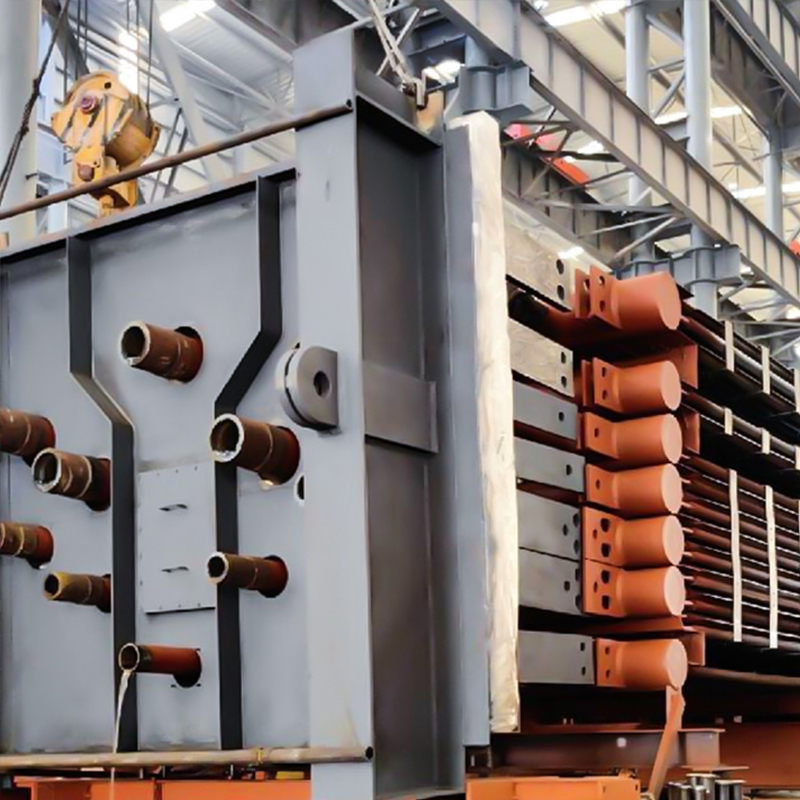 Industrial Waste Heat Boilers Suppliers, Industrial Boilers FactoryAs Industrial Waste Heat Boilers Suppliers and Industrial Waste Heat Boilers Factory in China, Wuxi Jinker offer Custom Industrial Waste...View Product →
Gas flow distribution and duct integration
Flue gas velocity and temperature uniformity affect both heat transfer performance and tube life. A modular HRSG must include inlet duct geometry that distributes exhaust gas evenly across the heat exchange surface. Engineers should ask for computational flow analysis or flow distribution test data as part of the design package. This data is often where a marginal modular design fails later in operation.
Connecting Modular HRSG Design with Economizer and Finned Tube Selection
Every heat exchange section inside a modular HRSG contributes to overall plant efficiency. The economizer sits in the coldest part of the flue gas path and is responsible for the final temperature lift before exhaust exits the stack. In a modular layout, the economizer section saves space and reduces installation work while maintaining the same thermal duty as a larger site-built equivalent.
Finned tubes are the core of that performance. Fins extend the heat transfer surface so the module stays compact while still absorbing sufficient heat. The fin type and material depend on fuel composition, flue gas temperature, and the risk of ash fouling. Manufacturers that produce finned tubes in-house control the fin-to-tube bond quality, which directly affects thermal contact resistance and long-term mechanical reliability. An economizer for boiler tail flue gas built with these in-house finned tubes typically shows lower stack losses and fewer weld interface defects than one assembled from outsourced elements.
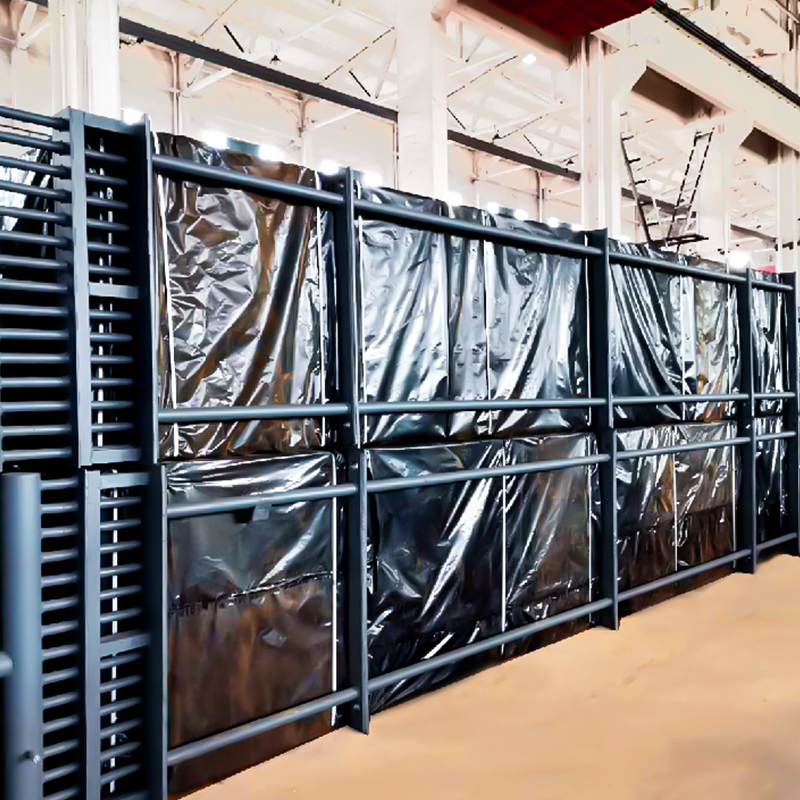 Boiler Flue Gas Economizers Suppliers, Flue Gas Economizers FactoryAs Boiler Flue Gas Economizers Suppliers and Flue Gas Economizers Factory, Jinker offer Custom Economizer for Boiler Tail Flue Gas, Boile...View Product →
A modular HRSG system is an execution strategy as much as an equipment choice. It moves the craft of boiler building from an exposed jobsite into a controlled factory, and it lets the project owner buy schedule confidence rather than just steel.
That confidence depends on choosing a supplier with ASME-level fabrication competence, an integrated supply chain for finned tubes and pressure parts, and the engineering capacity to support layout definition and thermal verification. A manufacturer that can demonstrate all three across the complete module set is far more likely to deliver the on-time, on-budget outcome that makes modular construction worthwhile.