English
  Français
  Español


Content
A 10 t/h industrial steam boiler with a stack temperature of 250°C discharges a large portion of its fuel energy straight into the atmosphere. An industrial boiler economizer changes that picture by recovering heat from the exhaust gas and transferring it to the feedwater. In most retrofit cases, this single piece of equipment improves boiler efficiency by 3 to 8 percent, cuts fuel consumption, and offers a project payback measured in months or a few years.
What Is an Industrial Boiler Economizer?
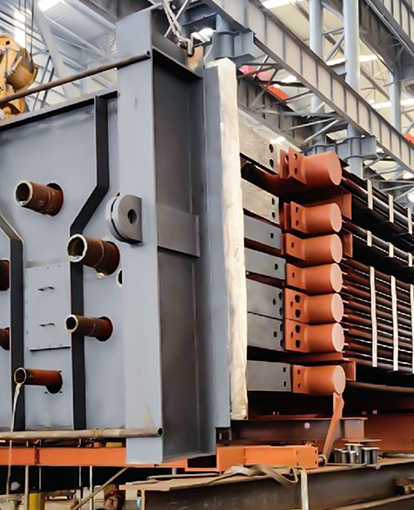
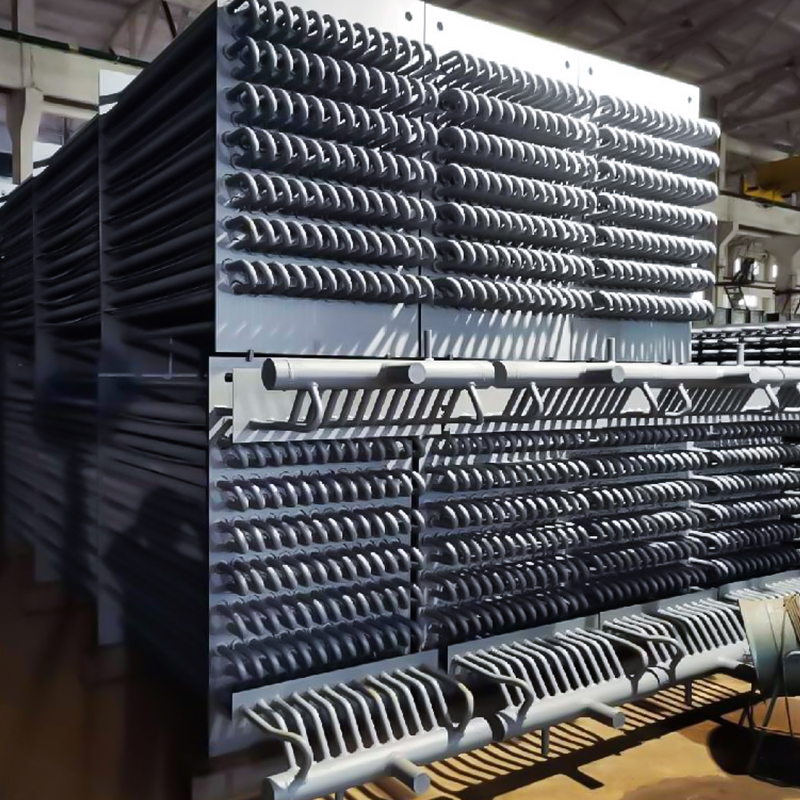
An economizer is a finned-tube heat exchanger installed between the boiler outlet and the stack. Its job is simple: capture heat that would otherwise escape and preheat the feedwater before it reaches the steam drum or boiler tubes. The name comes from the economic benefit, not from any special mechanical feature. Because feedwater enters the boiler at a higher temperature, the burner requires less fuel to generate the same amount of steam.
An industrial economizer can be used on fire-tube boilers, water-tube boilers, thermal oil heaters, and process heaters. It is often one of the most cost-effective heat recovery investments an industrial plant can make, especially when the boiler operates at continuous load or has limited space for a larger combustion-air preheater.
How an Industrial Boiler Economizer Works
The heat exchange process is straightforward. Flue gas flows across the outside of the tubes, while boiler feedwater flows through the inside. The temperature difference drives heat from the gas to the water. Water leaves the economizer hotter, and gas exits at a lower stack temperature. Every 20 to 25°C reduction in stack temperature typically raises boiler efficiency by about 1 percentage point.
From a system perspective, three operating values dominate the design:
- Flue gas inlet temperature, usually between 180 and 350°C for industrial boilers.
- Feedwater inlet temperature, often 25 to 105°C depending on deaerator pressure.
- Allowable gas-side pressure drop, normally kept below 50 mm H2O to protect burner draft.
Non-Condensing Economizers
Most industrial economizers are non-condensing, or dry, units. They recover sensible heat only and keep the flue gas temperature above the water dew point. This allows the use of carbon steel or cast iron finned tubes, keeps acid corrosion risk low, and provides a simple, low-maintenance design.
Condensing Economizers
A condensing economizer cools the flue gas below its dew point and recovers latent heat as well. Efficiency gains can be several percentage points higher than a non-condensing unit. The trade-off is the need for corrosion-resistant materials, water treatment for the condensate, and a place to drain acidic liquid. Condensing designs make sense for sites with continuous water demand, such as district heating networks or facilities using hot water scrubbers.
| Economizer type | Heat recovered | Typical stack temperature | Best suited for |
|---|---|---|---|
| Non-condensing | Sensible heat | 120-160°C | Most steam boilers; low capital cost; simple retrofit |
| Condensing | Sensible and latent heat | 60-100°C | Continuous hot water demand; low-sulphur fuels |
| Combination with air preheater | Sensible heat to water and combustion air | 100-150°C | Boilers with high excess air or process heaters |
Efficiency Gains and Project Payback
The real value of an industrial boiler economizer shows up in operating data. For a natural gas-fired boiler with flue gas at 230°C, adding an economizer designed to lower the stack temperature to 150°C often recovers 4 to 5 percent of the fuel input. On a boiler producing 6,000 tonnes of steam per year, that easily covers the installed cost within two years.
Fuel prices and annual operating hours dominate the payback calculation. A plant that runs 8,000 hours per year at high load sees a much shorter payback than a standby boiler used only in winter. Site-specific factors, including feedwater temperature, water chemistry, and the available stack draft, also shift the final result. Plant managers who want to follow the calculation step by step will find a detailed example in our article on how economizers cut fuel costs and recover waste heat.
Selection Considerations
An economizer is not a generic coil that can be sized by stack diameter alone. The wrong fin spacing, material, or pressure drop can turn an efficiency project into a maintenance problem. Flue gas analysis comes first: moisture content, particulate loading, sulphur or chloride levels, and the minimum expected load all affect material choice and tube pitch.
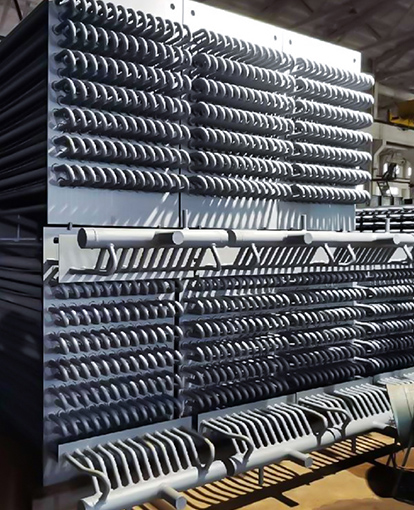
- Finned-tube geometry: H-type finned tubes shed ash more easily and resist fouling, while spiral finned tubes provide more compact surface for clean gas streams.
- Water-side conditions: oxygen attack and flow-assisted corrosion are controlled with deaerator operation and a reasonable tube-side velocity.
- Drainability and cleaning access: tubes should drain fully, and access panels should allow soot blower placement.
- Code compliance: economizers in steam service are pressure parts, so manufacturing must follow standards such as ASME, PED, or other local codes.
Finned-tube selection is a core part of the design. Because the flue gas side has a much lower heat transfer coefficient than the water side, engineers use finned surfaces to balance the thermal resistance. The comparison of H-type finned tubes and smooth tubes shows why fin geometry matters for fouling and long-term performance.
For a standard steam boiler installation, we offer economizers designed for boiler tail flue gas, engineered to match existing duct interfaces and meet the required water-side pressure drops.
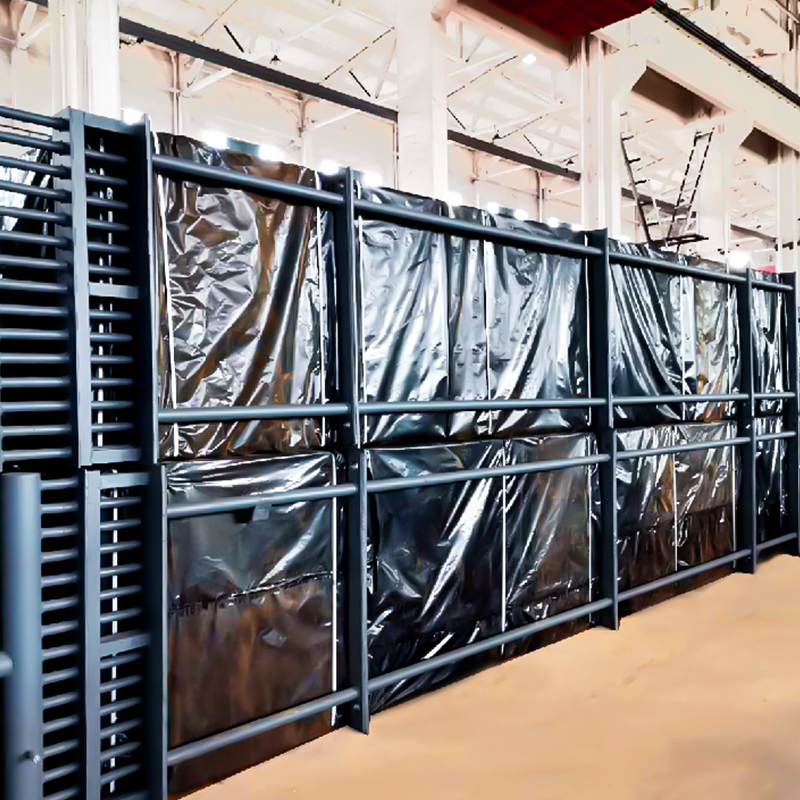 Boiler Flue Gas Economizers Suppliers, Flue Gas Economizers FactoryAs Boiler Flue Gas Economizers Suppliers and Flue Gas Economizers Factory, Jinker offer Custom Economizer for Boiler Tail Flue Gas, Boile...View Product →
Applications Across Industrial Sectors
Industrial boiler economizers are not limited to package steam boilers. They are widely installed on thermal oil heaters, reformer furnaces, dryer exhaust lines, and industrial kilns. In each case, the same principle applies: hot gas and cooler liquid exchange heat, and the recovered energy offsets primary fuel consumption.
For processes with high-temperature kiln exhaust, an industrial kiln flue gas economizer must accept high inlet temperatures and often handle dust loading. These units are built with wider fin pitch and reinforced tube sheets to remain reliable in continuous operation.
 Industrial Kiln Economizers Manufacturer, Economizer for Industrial Kiln Flue GaAs Ceramic Kiln Economizers Manufacturer and Glass Kiln Economizers Suppliers, Metallurgical Kiln Economizers Factory in China, Jinker of...View Product →
Process equipment such as petrochemical heaters and refinery furnaces also benefit. A process equipment flue gas economizer can preheat boiler feedwater or process water, improving heater efficiency by 3 to 6 percent and reducing draft fan power when designed with a conservative gas-side pressure drop.
Chemical Petrochemical Process Equipment Economizers Suppliers, FactoryJinker offer Economizers for Chemical and Petrochemical Process Equipment, Chemical and Petrochemical Process Equipment Economizers Suppl...View Product →Why Engineering and Manufacturing Quality Matter
An economizer lives in a difficult environment: high temperature, flue gas impurities, and water-side pressure. Small deficiencies in thermal design, welding, or material traceability appear later as leaks or premature corrosion. A supplier with pressure-part experience can review your drawings, calculate heat input, and convert your dimensions into manufacturable components. This is where project planning meets production reality.
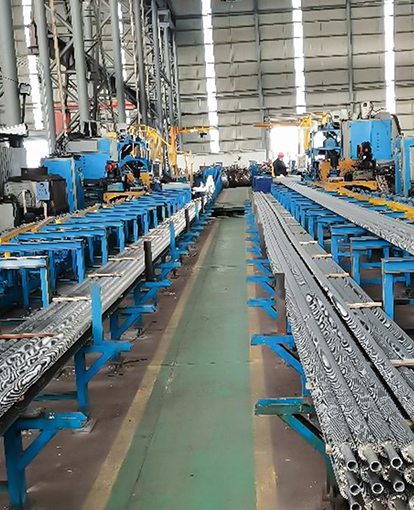
We describe the relevant processes, including pressure-part certification and engineering capabilities, in our company profile. Automated welding lines, radiographic inspection, and large production capacity allow the economizer to be delivered as a reliable pressure component rather than a simple fabricated coil.
The right industrial boiler economizer starts with a clear understanding of the flue gas and feedwater conditions, then moves into sound thermal design and careful manufacturing. When those steps are aligned, the economizer becomes one of the fastest ways to reduce energy cost, lower emissions, and improve the overall efficiency of an industrial boiler plant.