English
 Français
 Español



Content
A plant receives high-sulfur coal one month, a biomass blend the next, and a batch of washery rejects after that — and it still has to meet steam demand and emission limits every day. Fluidized bed combustion (FBC) exists for exactly this situation. In an FBC boiler, solid fuel particles are suspended in a hot, bubbling bed of sand, ash, and limestone, where they burn at roughly 850°C. That one design choice does most of the work: the low bed temperature suppresses thermal NOx formation, and limestone mixed into the bed captures 90 percent or more of the fuel sulfur inside the furnace itself, before it ever reaches the stack. The result is a boiler that turns low-grade, hard-to-burn fuels into usable steam at combustion efficiencies above 90 percent. What engineers should not overlook is the other half of the story — the path that hot, dust-laden flue gas takes through the back-pass, because that is where the projected fuel savings either materialize or leak away.
How Fluidized Bed Combustion Works
The principle is easy to visualize. Air enters a windbox below the furnace and passes upward through a distributor plate into a layer of inert material — sand, ash, or spent limestone — a few hundred millimeters deep. Once air velocity reaches the fluidizing point, roughly 1 to 2 meters per second in a bubbling bed and 4 to 6 meters per second in a circulating bed, the particles lose contact with one another and the bed behaves like a boiling liquid. Fuel crushed to feed size is injected directly into this mass, and the violent mixing brings every particle into contact with oxygen and hot solids. Because the bed holds a thermal inventory many times the energy released per second by the fuel, the temperature stays nearly uniform at 820 to 900°C across the entire furnace.
What the Low Temperature Makes Possible
The chemistry inside the bed explains why FBC earns its place. Limestone fed with the fuel first calcines in the heat, releasing CO2 and leaving reactive lime; that lime then reacts with SO2 from the coal to form solid CaSO4, which exits with the ash. Sulfur removal therefore happens inside the furnace, not in a separate scrubber. The same low-temperature environment produces three further practical outcomes:
- Fuel flexibility — coal, biomass, sludge, petroleum coke, and waste-derived fuels can be fired, often blended or switched with minimal derating.
- Reliable burnout of poor fuels — the bed acts as a permanent ignition source, so high-moisture and high-ash fuels combust stably.
- Effective sulfur capture — a calcium-to-sulfur molar ratio of about 2.0 to 2.5 typically removes 90 percent or more of the fuel sulfur.
- Low NOx — thermal NOx barely forms at 850°C, and staged combustion air holds uncontrolled emissions far below those of high-temperature firing.
Three Configurations: BFB, CFB, and PFBC
Bubbling Fluidized Bed (BFB)
BFB boilers run at the lower end of the velocity range, around 1 to 3 m/s. Most solids stay in the furnace, in-bed or wall surfaces extract the heat, and fuel is fed over the bed surface. This configuration handles wet biomass, sludge, and coarse fuels well, which is why it dominates industrial steam plants firing those streams.
Circulating Fluidized Bed (CFB)
CFB boilers raise the velocity to 4 to 6 m/s so that large quantities of solids are entrained out of the furnace, captured in a cyclone, and returned through a loop seal. A solid particle may circulate dozens of times before leaving as ash, extending residence time and pushing combustion efficiency to 97 to 99 percent. CFB is today's default for utility-scale and large industrial plants firing low-grade coal, because it combines the highest efficiency with the widest fuel tolerance.
Pressurized Fluidized Bed (PFBC)
PFBC runs the whole system at 10 to 16 bar inside a pressure vessel and expands the hot, pressurized flue gas through a gas turbine in addition to raising steam. Although the efficiency logic is sound, only a handful of demonstration plants were built, and it remains a niche. For most projects, the practical decision is between BFB and CFB.
| Parameter | BFB | CFB | PFBC |
|---|---|---|---|
| Fluidizing velocity | 1-3 m/s | 4-6 m/s | Similar to CFB |
| Operating pressure | Atmospheric | Atmospheric | 10-16 bar |
| Combustion efficiency | 90-96% | 97-99% | 99%+ design target |
| Sulfur control | In-bed limestone | In-bed limestone | In-bed limestone |
| Typical scale | Up to ~100 MWth | Industrial to 600 MWe class | Demonstration only |
| Best-suited fuels | Wet biomass, sludge, coal | Low-grade coal, petcoke, mixed fuels | High-sulfur coal |
Why Plants Choose FBC
The business case rests on three pillars: it burns fuel that conventional boilers cannot, it meets emission limits with a simpler gas path, and it does so without sacrificing meaningful efficiency. For plants with access to cheap problem fuels, the arithmetic is decisive — washery rejects, petroleum coke, or waste fuels can cost a fraction of standard coal, and an FBC unit converts that discount directly into operating savings. Compliance also favors the technology: sulfur is captured with limestone in the bed, NOx control comes largely free from the low bed temperature, and the numbers below reflect routine performance rather than laboratory promises.
~850°CBed operating temperature
90%+In-bed sulfur capture
97-99%CFB combustion efficiency
2.0-2.5Typical Ca/S molar ratio
The Back-Pass: Where FBC Economics Are Won or Lost
Fluidization solves the furnace; it does nothing for what leaves it. Gas exits a CFB cyclone at 850 to 900°C and enters the back-pass carrying a heavy load of fine solids. Bed ash is largely hard, angular mineral matter, and even after cyclone separation the stream remains abrasive and fouling-prone. Every convective surface downstream — superheaters, evaporator banks, and the economizer — must therefore be designed around erosion and ash accumulation as much as around heat transfer.
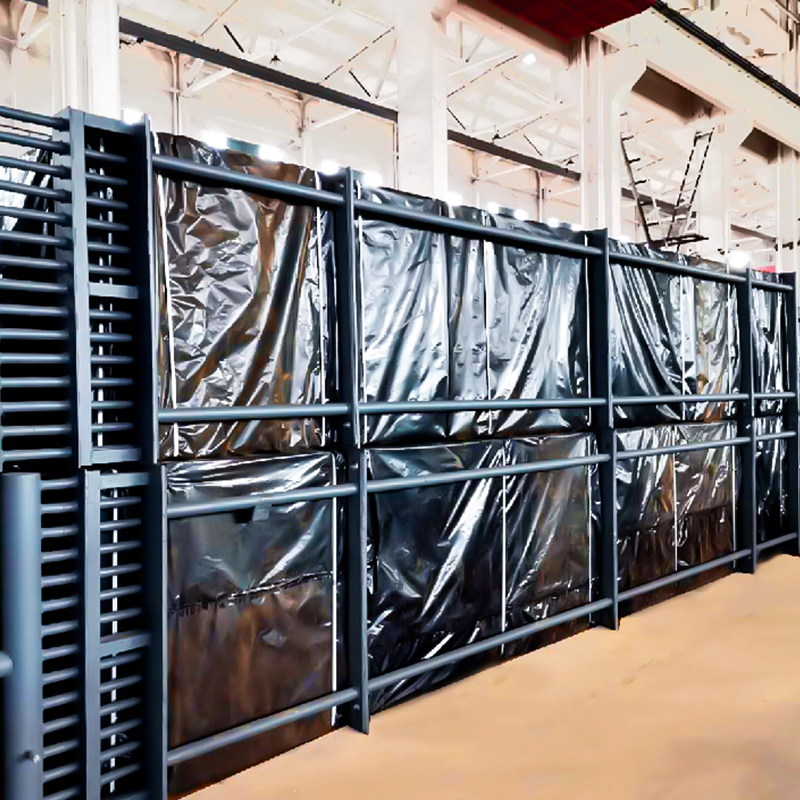 Boiler Tail Flue Gas Economizer for Feedwater Heat RecoverySitting at the cold end of the CFB back-pass, this economizer absorbs remaining heat before the air heater and stack, cutting exit gas temperature and boiler fuel use even in abrasive, ash-laden flue gas.View Product →
The economizer carries much of this duty. Sitting at the cold end of the gas path, it absorbs the last usable heat before the air heater and stack. As a working rule, every 15 to 20°C reduction in exit gas temperature is worth about 1 percent of boiler efficiency, so the gap between a well-matched economizer and an undersized one becomes a permanent line on the fuel bill. In high-dust service the tubes also need protection: moderate gas velocities, wear shields on leading rows, and extra margin on wall thickness.
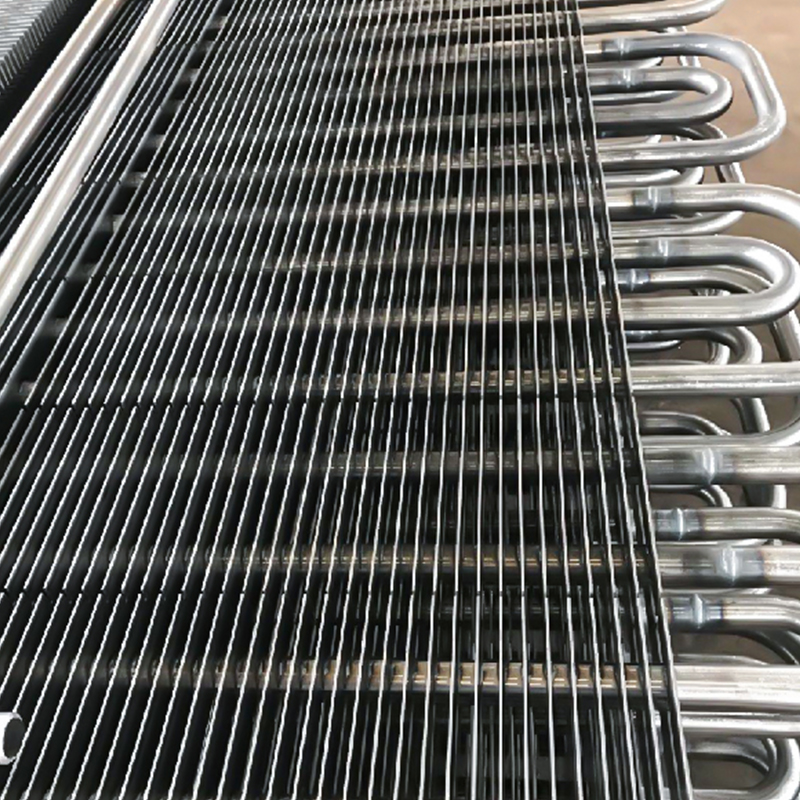 H-Type Finned Tube for Dust-Laden Flue GasParallel H-fins form straight gas lanes that resist ash buildup and erosion while adding large extended surface, making these tubes a fitting choice for the fouling-prone convective surfaces downstream of a CFB cyclone.View Product →
Fin geometry matters just as much. H-type finned tubes were developed for exactly this environment: fins welded in parallel rows leave straight gas lanes between tubes, reducing turbulence at the fin root and the eddy zones where ash settles, while adding large heat-transfer surface in compact modules. That combination of extended area, erosion resistance, and self-cleaning behavior has made them the standard extended surface in CFB back-passes. Before fixing a surface design, it is worth reviewing how H-type finned tubes compare with smooth tubes in high-dust flue gas.
Specifying the Heat Recovery Around an FBC Plant
For an industrial operator, the FBC boiler is rarely a standalone purchase; it anchors a heat-recovery network. Steam from the bed drives processes, and in many layouts a separate waste heat boiler set into a hot exhaust stream — kiln off-gas, furnace gas, or solids coolers — converts surplus heat into additional steam without burning another kilogram of fuel. Treating the FBC unit and its downstream surfaces as one integrated system is what turns fuel flexibility into payback.
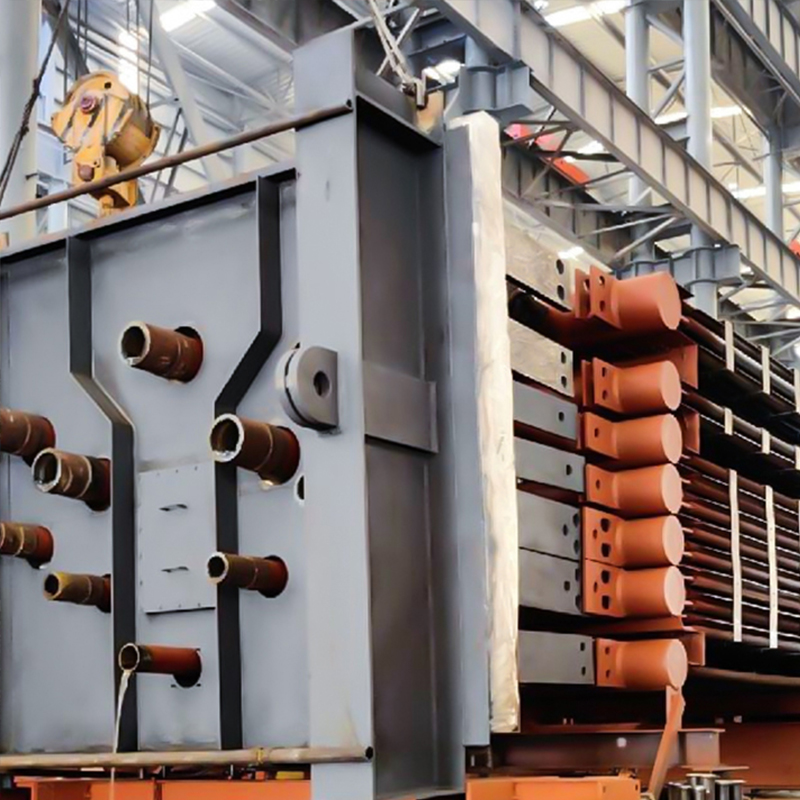 Industrial Waste Heat Boiler for Exhaust StreamsAs an FBC boiler anchors an integrated heat-recovery network, a waste heat boiler converts surplus heat from kiln off-gas or furnace exhaust into additional steam without consuming extra fuel.View Product →
Procurement should be screened on the same three axes the technology demands. First, compliance: pressure parts built to ASME requirements with documented welding quality, backed by automated welding lines and real-time X-ray inspection rather than paperwork alone. Second, engineering fit: the supplier should work from 3D layouts, verify heat inputs, and convert existing drawings so new surfaces drop into the current gas path without redesign. Third, capacity: EPC schedules punish suppliers who cannot deliver tonnage, and an annual output above 20,000 tonnes is a fair threshold to ask about. Manufacturers such as Wuxi Jinker Power Equipment supply economizers, finned tubes, and waste heat boilers as one product family — which is precisely how an FBC back-pass should be bought. Before locking the surface design, it also pays to revisit how boiler economizers cut fuel costs and recover waste heat.
Fluidized bed combustion holds its position in modern power and steam generation because it does what high-temperature firing cannot: burn cheap, awkward fuels within modern emission limits. The bed's temperature and limestone chemistry set those limits; the back-pass surfaces set the economics. Specifying both with equal rigor — stable bed conditions on one side, erosion-resistant finned heating surfaces and a properly sized economizer on the other — is what separates an FBC project that pays for itself from one that quietly underperforms.