English
  Français
  Español


Content
- 1 What Is a Heat Exchanger?
- 2 What Is a Cooler?
- 3 Key Differences Between a Heat Exchanger and a Cooler
- 4 How to Choose Between Heat Exchanger and Cooler for Your Process
- 5 Why Finned Tubes Matter in Heat Exchange and Cooling
- 6 Heat Recovery: Where Heat Exchangers Become Economizers
- 7 Cooling in Power and Industrial Plants: Waste Heat Boilers
An operations engineer recently asked whether a heat exchanger or a cooler was the correct option for a compressor package. The short answer is that a cooler is a specialized heat exchanger, but the difference matters when sizing, selecting materials, and planning energy recovery. If the priority is to remove unwanted heat and keep a process stream within limits, a cooler designed for that duty is the straightforward choice. If the priority is to capture heat that would otherwise be lost, a heat exchanger such as an economizer or a waste heat boiler is more appropriate. Getting this distinction right prevents costly mistakes and often reveals fuel-saving opportunities that a conventional cooler would miss.
What Is a Heat Exchanger?
A heat exchanger is any device that transfers thermal energy from one fluid to another without allowing them to mix. The fluids are usually separated by a conductive metal wall, and the surface area, flow arrangement, and fluid properties control how fast heat moves across that wall. The most common industrial forms are shell-and-tube, plate, and finned-tube exchangers.
Shell-and-tube units pack many small tubes inside a larger body, making them suitable for high-pressure and high-temperature services. Plate exchangers use corrugated plates to create a large heat-transfer area in a compact footprint, which is useful for clean liquids. Finned-tube exchangers add extended surfaces on the gas side to compensate for the poor heat-transfer coefficient of air or flue gas. These designs are widely used in boiler economizers and air-cooled coolers.
Use a heat exchanger when you need to heat, cool, condense, or vaporize a process stream. All of these functions involve the same fundamental principle; the difference is how the equipment is configured and what materials are selected for the expected temperatures, pressures, and corrosion risks.
What Is a Cooler?
A cooler is a heat exchanger with a narrow mission: it brings a fluid down to a required temperature by rejecting heat to a colder medium, typically air or water. You will find coolers in lubrication systems, hydraulic packs, compressor intercoolers, and chemical reactor temperature-control loops. In all these cases, the goal is thermal stability rather than heat recovery.
Air-cooled heat exchangers are favored in refineries and petrochemical plants because they avoid the civil works and maintenance associated with cooling water. Water-cooled coolers are used where water is abundant and where space for large finned coils is limited. The rejected heat normally goes to the environment and is not recovered, which is perfectly acceptable when the heat has no economic value.
Key Differences Between a Heat Exchanger and a Cooler
At the specification level, the distinction is practical rather than academic. The table below summarizes how the two categories differ.
| Aspect | Heat Exchanger | Cooler |
|---|---|---|
| Primary goal | Transfer heat for heating, recovery, or process duty | Remove unwanted heat to a cold medium |
| Outlet temperature | Set by process need, may be higher or lower than inlet | Usually near ambient or equipment limit |
| Common types | Shell-and-tube, plate, finned-tube, economizer, HRSG | Air-cooled unit, water-cooled unit, oil cooler |
| Energy role | Can recover waste heat and reduce fuel use | Dissipates heat and does not conserve energy |
The same core hardware can serve either role. An air-cooled heat exchanger can be called a cooler when its purpose is simply to lower temperature. Reconfigure its duty and it becomes part of a heat-recovery circuit. Understanding this relationship is the key to deciding what you actually need.
How to Choose Between Heat Exchanger and Cooler for Your Process
Begin the selection process by defining the process objective. If a pump, seal, or reactor cannot tolerate high temperature, the equipment class is a cooler. If you want to preheat feedwater or raise steam with waste heat, the equipment class is an energy-recovery heat exchanger. After that initial decision, evaluate these factors:
- Heat duty. Calculate the required heat-transfer rate in kilowatts or kBtu/h. This number sets the surface area and physical size, so be as accurate as possible and include overload margins.
- Temperature range. Maximum and minimum temperatures determine the material of construction, thermal expansion checks, and the type of gaskets or welds required.
- Fluid compatibility and fouling. Dirty, corrosive, or viscous fluids force the designer to choose larger tube spacing, corrosion-resistant alloys, and cleanable geometries.
- Available utilities. If cooling water is scarce or expensive, an air-cooled cooler makes sense. If a low-grade heat sink already exists, a water-cooled cooler may be more compact.
- Pressure drop. Tight pressure-drop limits often require larger heat-exchange surfaces, so confirm the allowable drop with the process engineer before finalizing the design.
These factors rarely act independently. A high gas temperature with a low allowable pressure drop, for example, will push you toward finned-tube equipment with more surface area. Clean liquid duties may allow a compact plate exchanger. The design that works in practice is the one that balances thermal performance, installed cost, and long-term maintenance.
Why Finned Tubes Matter in Heat Exchange and Cooling
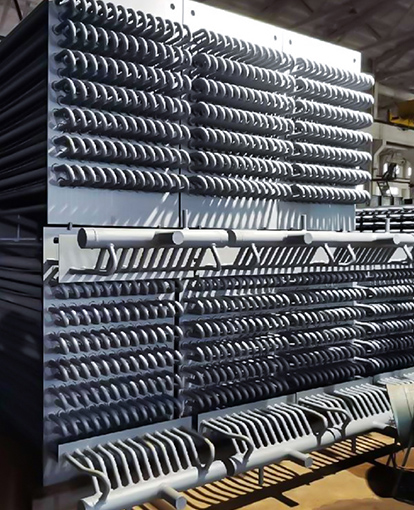
When one side of the exchanger is a gas, bare tubes are rarely efficient enough. Air, flue gas, and steam have low heat-transfer coefficients compared to water or oil, so the tube surface must be enlarged to compensate. Finned tubes provide that enlargement by adding a secondary surface to the outside of the tube. The extended fins increase the heat-transfer area by several times, which directly reduces the number of tubes needed and the overall footprint.
Spiral finned tubes are a workhorse in air-cooled heat exchangers and boiler economizers. H-type finned tubes offer a similar benefit in high-temperature and high-fouling services. The exact fin pitch, height, and material are chosen based on gas temperature, corrosion potential, and cleaning requirements. For example, a boiler burning heavy fuel oil may need wider fin spacing to avoid ash fouling, while a clean natural-gas exhaust can use tighter fins for maximum surface area.
 Spiral Finned Tube for Enhanced Heat Transfer in Boilers and ExchangersThis product increases heat transfer area with spiral fins on a base tube, supporting economizer and air-cooled exchanger duty. Its fin geometry and material options help match flue gas conditions and cleaning needs.View Product →
Heat Recovery: Where Heat Exchangers Become Economizers
An economizer is a perfect example of a heat exchanger taking on a recovery role. It sits in the exhaust gas stream and transfers leftover heat to boiler feedwater before the water enters the evaporation section. For every 35 to 55 °C you reduce the exhaust temperature, boiler efficiency may rise by roughly 1 percent. This reduction translates directly into lower fuel consumption and fewer emissions.
Finned tubes are used in most boiler economizers because flue gas is on the gas side. The fin material and spacing must be matched to the fuel and to the sulphur content of the gas to avoid low-temperature corrosion. Our boiler tail flue gas economizer is designed for this specific duty, incorporating the correct fin geometry and steam-side flow paths to achieve the target gas outlet temperature.
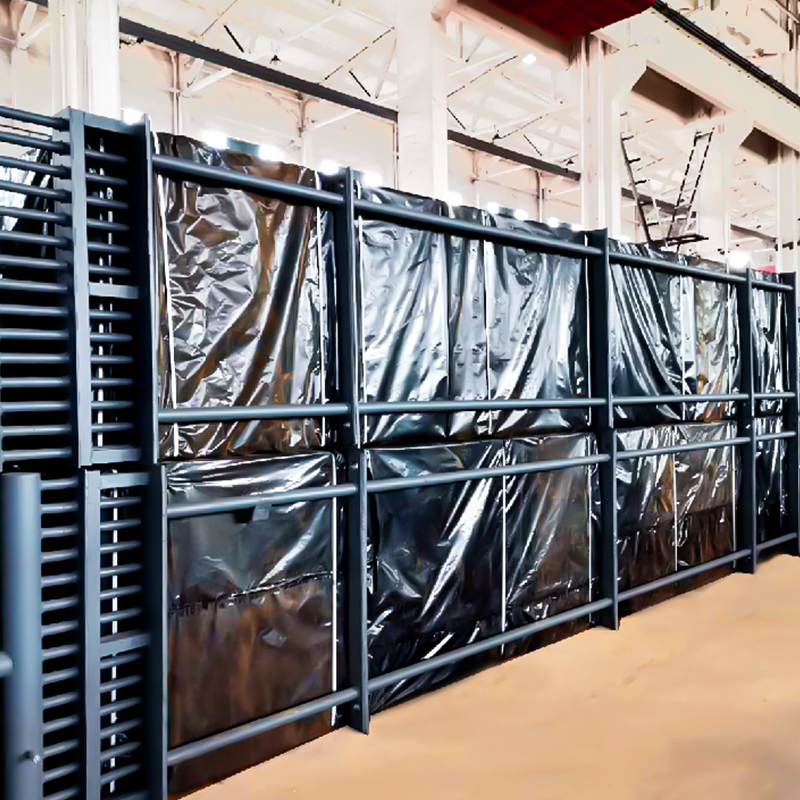 Boiler Tail Flue Gas Economizer for Waste Heat RecoveryThis economizer recovers heat from boiler exhaust, raising feedwater temperature and improving thermal efficiency. It is designed for flue gas between 120–400°C and adapts to fuel type and corrosion risks.View Product →
To understand the full flow of an economizer in a boiler system, you can consult our engineer’s guide to boiler economizers.
Cooling in Power and Industrial Plants: Waste Heat Boilers
Sometimes the most economical way to cool a very hot gas is to treat that heat as a resource rather than a waste stream. Waste heat boilers, also called heat recovery steam generators (HRSGs), take exhaust gas from a gas turbine, a kiln, or another high-temperature process and use it to raise steam. The steam can power turbines, drive process compressors, or supply heating. In this way, the equipment performs a cooling duty while producing useful energy.
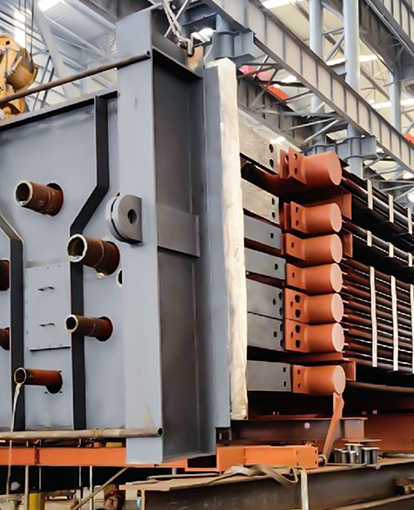
An industrial waste heat boiler is a compact yet carefully designed structure with finned water walls, tube banks, and a steam drum. Because the inlet gas conditions can vary during normal operation, the mechanical design must tolerate thermal cycling and possible fouling. Our industrial waste heat boiler is designed with these dynamics in mind, making it a practical replacement for simple heat rejection where revenue from steam is possible.
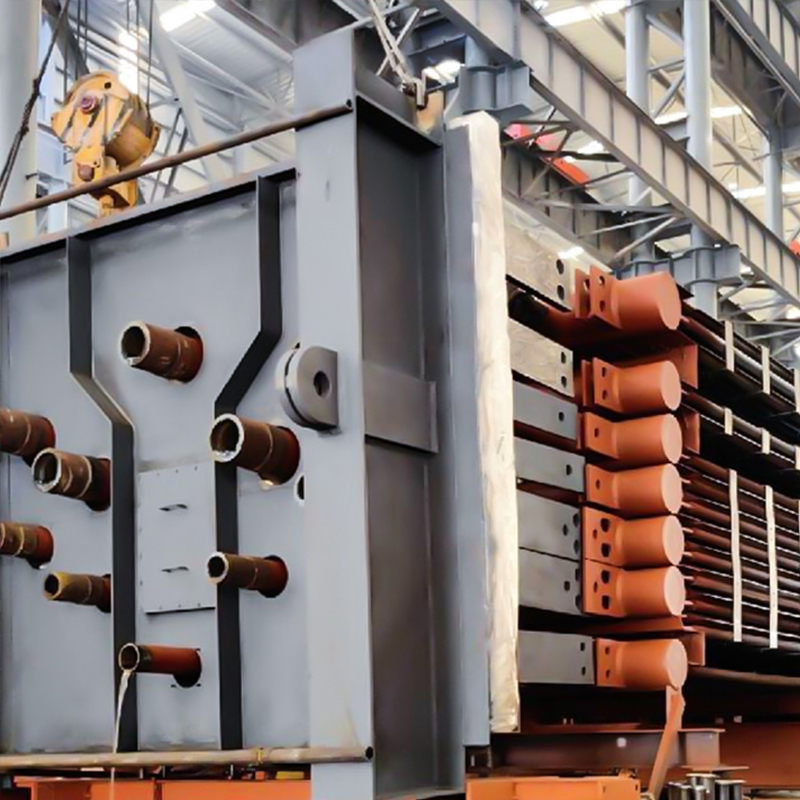 Industrial Waste Heat Boiler for Steam Generation from Process GasThis boiler recovers heat from industrial exhaust streams to produce steam, handling varying gas temperatures and fouling. It suits steel, chemical, and cement applications where waste heat can be converted into useful energy.View Product →
The key lesson from these examples is to define your heat objective before choosing a product category. If the heat is useful, use a heat exchanger that supports recovery. If the heat is simply a problem, use a cooler that maintains a stable temperature. In both cases, the finned-tube arrangements and the materials you choose have as much impact as the equipment label. Talk to an experienced engineering team that can review your process data and help you translate operating conditions into a reliable specification. That practical step saves time, prevents operating problems, and reduces the total cost of the heat-transfer system.