English
 Français
 Español



Content
A steam sparger is a cheap piece of pipe right up to the moment it starts hammering against its supports, and by then the tank it sits in is usually feeding a production line.
Take a 20 cubic metre tank that has to go from 15 deg C to 80 deg C in 45 minutes. The duty is about 2,000 kW. At 6 bar g, with condensate leaving close to the tank temperature, one kilogram of steam gives up roughly 2,400 kJ once the sensible heat is credited, so the sparger must pass about 3.0 t/h. That single figure sets the bore, the hole count and the velocity the pipe has to survive.
Size it too small and the batch never reaches temperature. Size it too large and the pipe whistles, vibrates and cracks between the hole rows within a couple of seasons.
What a Steam Sparger Does
A steam sparger is a direct-contact heater: a drilled pipe inserted into a liquid-filled vessel, through which steam is injected and condensed into the liquid itself.
Definition: a steam sparger, also called a sparge pipe, is a perforated steam injection pipe that discharges below the liquid surface of a tank or vessel. Heat moves by direct condensation at the bubble interface rather than through a metal wall.
How the heat transfer works
Steam leaves each hole as a high-velocity jet, breaks into bubbles and collapses as the latent heat passes into the surrounding liquid. No wall separates steam from product, so efficiency at the injection point is close to 100 percent. The constraints lie elsewhere: the condensate dilutes the batch, the liquid cannot pass the saturation temperature of the steam at supply pressure, and the mixing energy has to come from the jets themselves.
Where spargers are used
- Wash, rinse and clean-in-place tanks in food and beverage plants
- Parts washing and phosphating baths in metal finishing
- Boiler feedwater deaerators and condensate tanks
- Water treatment and neutralisation basins
3.0 t/h Steam for a 20 m3 tank in 45 minutes at 6 bar g
4-8 mm Typical sparge hole diameter
300 mm Minimum submergence below the water line
Most spargers run on steam between 2 and 8 bar g and pass anywhere from 500 kg/h to 15 t/h, so the design window is wide but the failure modes are consistent.
Sizing the Sparger: Steam Load, Bore and Hole Area
Sparger sizing comes down to three numbers, and everything else, including noise and vibration, follows from them: steam mass flow, sparge pipe bore and total hole area.
Steam flow comes from the energy balance. Multiply the liquid mass plus the water equivalent of the tank wall by the specific heat and the temperature rise, divide by the heating time to get kW, then divide by the heat each kilogram of steam releases: the latent heat at supply pressure plus the sensible heat the condensate gives up on the way down to liquid temperature.
Steam flow (kg/h) = 3600 x duty (kW) / (latent heat + sensible heat)
At 6 bar g that denominator is roughly 2,400 kJ/kg. At 3 bar g it falls to about 2,250 kJ/kg, and the sparger needs around 7 percent more steam for the same duty. Add 5 to 10 percent for heat losses from the tank surface.
| Parameter | Typical value | Why it matters |
| Steam velocity in the pipe | 20-25 m/s | Higher causes noise and erosion, lower means an oversized pipe |
| Hole exit velocity | 25-30 m/s | Keeps jets stable and limits vibration |
| Hole diameter | 4-8 mm | Small holes plug with scale, large holes heat unevenly |
| Submergence | 300 mm minimum | Shallower holes splash and run dry |
| Clearance above tank floor | 100-200 mm | Avoids sludge pick-up and slugging |
| Turndown | 3:1 to 5:1 | Below this, distribution along the pipe becomes uneven |
Hole pattern and layout rules
The hole pattern decides whether a tank heats evenly or develops a 10 to 15 deg C gradient from one end to the other.
- Set the bore from the maximum steam flow at 20 to 25 m/s, then check the same pipe does not fall below 10 m/s at minimum turndown.
- Calculate total hole area from the exit velocity limit, then add 50 to 100 percent more holes to allow for partial blockage.
- Arrange holes in two staggered rows 45 degrees below horizontal, or a single row facing down. Never face them upward.
- Space holes 8 to 12 diameters apart across the full length of the run so the jets sweep the tank rather than one corner.
- Slope the pipe back toward the inlet and drain the low end, so condensate cannot travel as a slug when the valve opens.
A sparger is not a mixing device. Where no other agitation exists, the jets have to sweep the whole volume, which normally means a longer run with more, smaller holes rather than a short pipe with a few large ones.
Failure Modes and How Sparging Compares
Three failures account for most sparger downtime: water hammer at start-up, thermal fatigue cracking between the hole rows, and vibration damage to supports and branch connections.
- Knocking when the steam valve opens points to condensate sitting in the line. Fit a drain pocket at the low end and open the valve slowly.
- Cracks radiating between holes after 12 to 24 months mean the top of the pipe is cycling between wet and dry. Increase submergence or tighten the level control band.
- Worn supports and cracked branch welds come from vibration. Bring hole exit velocity below 30 m/s and add a guide near the mid-point.
- A hot zone near the inlet with cold liquid farther along means too few holes of too large a diameter. Recalculate total hole area first.
Steam sparging
- Lowest capital cost: a drilled pipe, a control valve and a drain
- No heat transfer surface to foul
- Condensate dilutes the batch and must be designed into the recipe
- Turndown depends entirely on hole design
Indirect heating
- Steam and product stay separate, so no dilution
- Control within 1 to 2 deg C of set point is achievable
- The heat transfer surface fouls and needs cleaning
- Higher capital cost and a larger footprint
Sparging is the cheapest way to heat a liquid and the least controllable. When the process needs the final two degrees, a sparger alone will not deliver them.
Materials, Codes and Procurement Checks
For water and most process liquids, 316L stainless steel with a minimum wall thickness of schedule 40 is the practical default for a sparge pipe. Carbon steel is acceptable only in closed, treated systems where water chemistry is controlled.
| Service | Recommended material | Practical notes |
| Treated water and condensate tanks | Carbon steel SA-106 Gr B | Lowest cost, allow 1.5 mm corrosion allowance |
| Process water, mildly acidic or alkaline | 316L stainless | Standard choice for food and pharmaceutical duties |
| Brine, seawater, chloride-bearing water | Duplex 2205 or 6Mo | Austenitic grades risk chloride stress corrosion cracking above 60 deg C |
| High-temperature steam headers | Alloy steel such as P11 or P22 | Match the parent line specification and weld procedures |
- Confirm which piping code governs the line: ASME B31.1 for power piping, B31.3 for process piping.
- Ask for the hole pattern drawing with diameter, spacing, number of rows and a positional tolerance.
- Require a hydrostatic test at 1.5 times design pressure and dye-penetrant inspection of the hole rows on critical lines.
- Request material certificates to EN 10204 3.1 and a weld map with welder qualification records.
- Buy from a fabricator that can confirm heat input and convert 3D layout models before welding starts, since that is where most field rework begins.
A sparge pipe is a pressure part. It should be bought with the same documentation as any other pressure component in the steam system, even when it looks like a length of drilled pipe.
The Heat Recovery System Behind the Sparger
In most plants the steam a sparger injects is not generated for the purpose. It is recovered from exhaust gas or process waste heat, and that is what makes the economics work.
A sparger specification usually arrives with the steam source already fixed: a heat recovery steam generator on a gas turbine exhaust, a waste heat boiler downstream of a kiln or furnace, or a plant steam main. Recovering another 10 percent of the heat in the flue gas changes the payback on a sparger installation from years to months, and it often raises the pressure available at the sparger, which widens the temperature range the tank can reach.
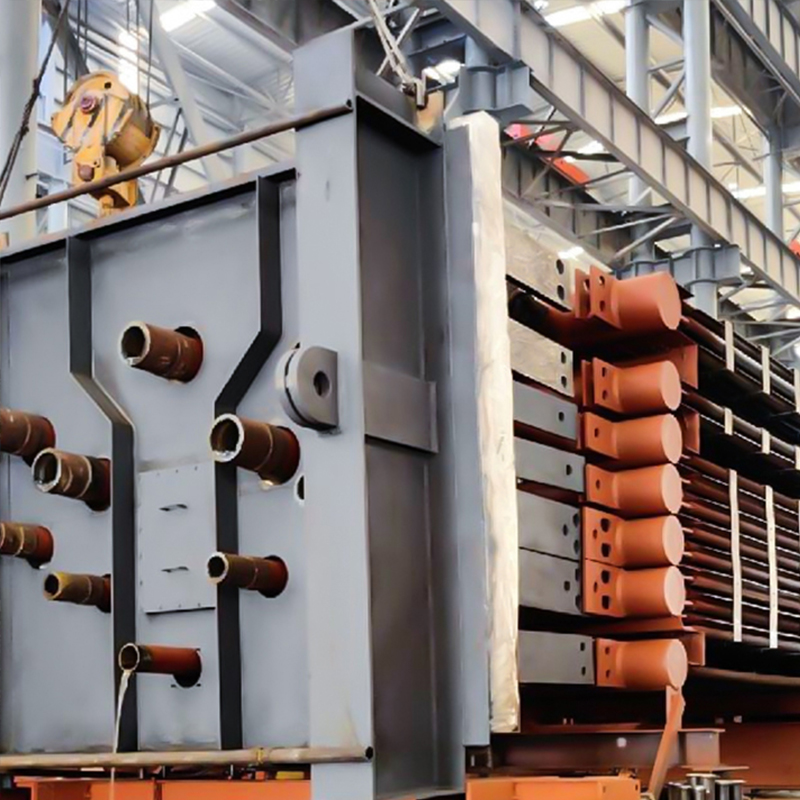 Industrial Waste Heat Boiler for HRSG Flue Gas RecoveryAdapts to steel, chemical, cement and smelting flue gas, recovering waste heat with flexible steam capacity and corrosion-resistant designs.View Product →
The recovery chain matters as much as the sparger itself. Finned tubes are the basic heat transfer element in both economizers and heat recovery steam generators, and the choice between H-type, spiral and heat pipe designs decides how much fouling a unit tolerates and how easily it can be cleaned. In dusty flue gas an H-type finned tube keeps the gas lanes straight and is easier to soot-blow, while spiral finned tube packs more surface into the same volume and suits cleaner gas.
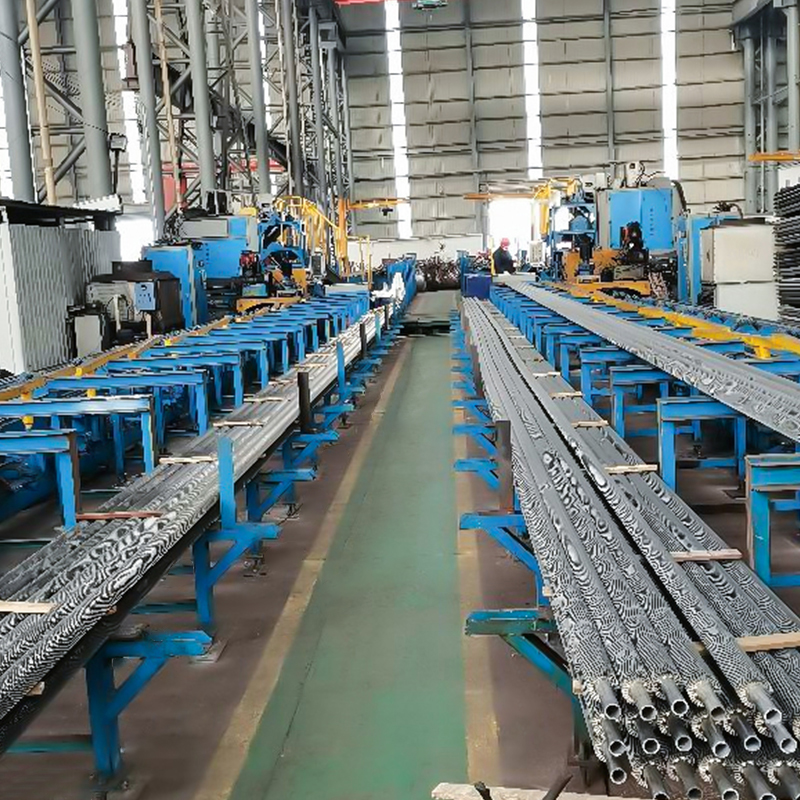 Spiral Finned Tube for Boiler and Waste Heat RecoveryHigh-efficiency heat exchange component with customizable fin geometry, suited to cleaner flue gas where compact heat transfer surface is needed.View Product →
Downstream of the tube bundle, the economizer does the low-temperature work, pulling the last useful heat out of the flue gas before it reaches the stack. In process equipment exhaust, cold-end corrosion and acid dew point have to be balanced against the extra heat recovered.
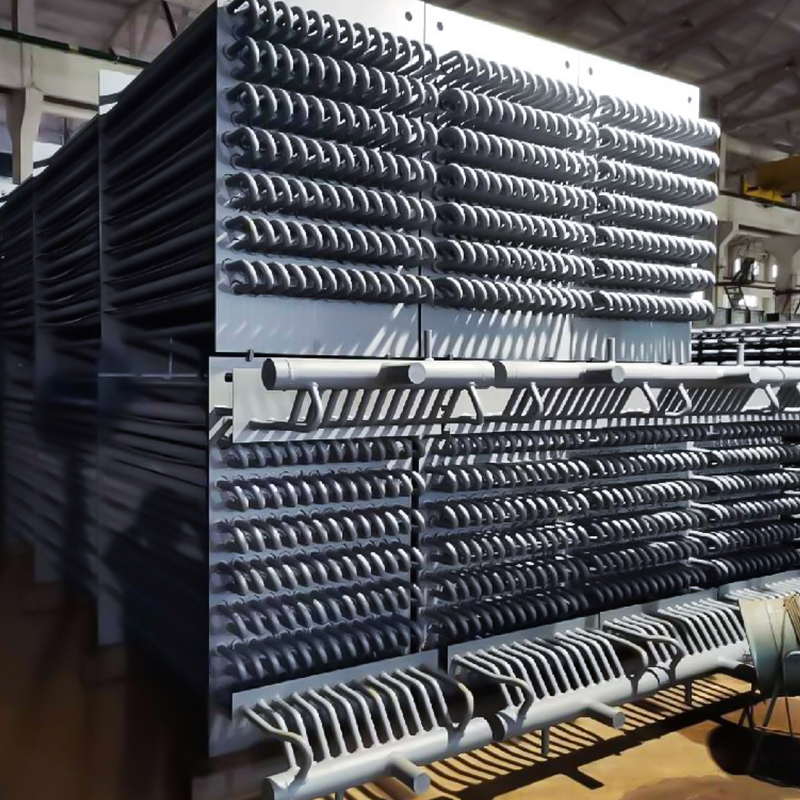 Economizer for Chemical and Petrochemical Process Equipment Flue GasRecovers low-temperature waste heat from refinery and methanol process exhaust with sealed corrosion-resistant construction and monitoring for variable operation.View Product →
Whatever the configuration, the heat transfer surface is where fouling, erosion and vibration appear first, so finned tube inspection planning belongs in the same conversation as sparger maintenance.
A sparger is only as cheap as the steam behind it. Recover that steam upstream and the whole calculation changes.
Frequently Asked Questions
How do you calculate the steam flow for a sparger?
Multiply the liquid mass plus the water equivalent of the tank by the specific heat and the temperature rise, divide by the heating time to get kW, then divide by the heat released per kilogram of steam. At 6 bar g with condensate leaving at tank temperature that is about 2,400 kJ/kg, so a 2,000 kW duty needs roughly 3.0 t/h. Add 5 to 10 percent for heat losses during warm-up.
Why does a sparge pipe knock when the steam valve opens?
Condensate. An idle sparge pipe fills with water, and steam entering at full flow pushes that slug along the line. Slope the pipe back to a drain pocket, remove the condensate before the valve opens, and bring the flow up slowly. On larger lines a warm-up bypass costs far less than the damage one water hammer event can cause.
How deep should a sparger be submerged?
At least 300 mm below the lowest operating liquid level, with 100 to 200 mm clearance above the tank floor. Shallower submergence causes splashing and noise, and it lets the top of the pipe run dry and cycle, which is the usual origin of fatigue cracks between the hole rows.
Three numbers govern a sparger: steam flow, hole area and submergence depth. Get all three right and the rest is documentation.
Spargers do not need to be complicated, but they do need to be calculated. The tank volume sets the duty, the duty sets the steam flow, the steam flow sets the bore and the hole area, and the submergence decides whether the pipe lasts its design life or cracks in its second season.
A sparger is a pressure part with a process function. Size it from the energy balance, lay out the holes for the full turndown range, and buy it with the same paperwork as the rest of the steam system.